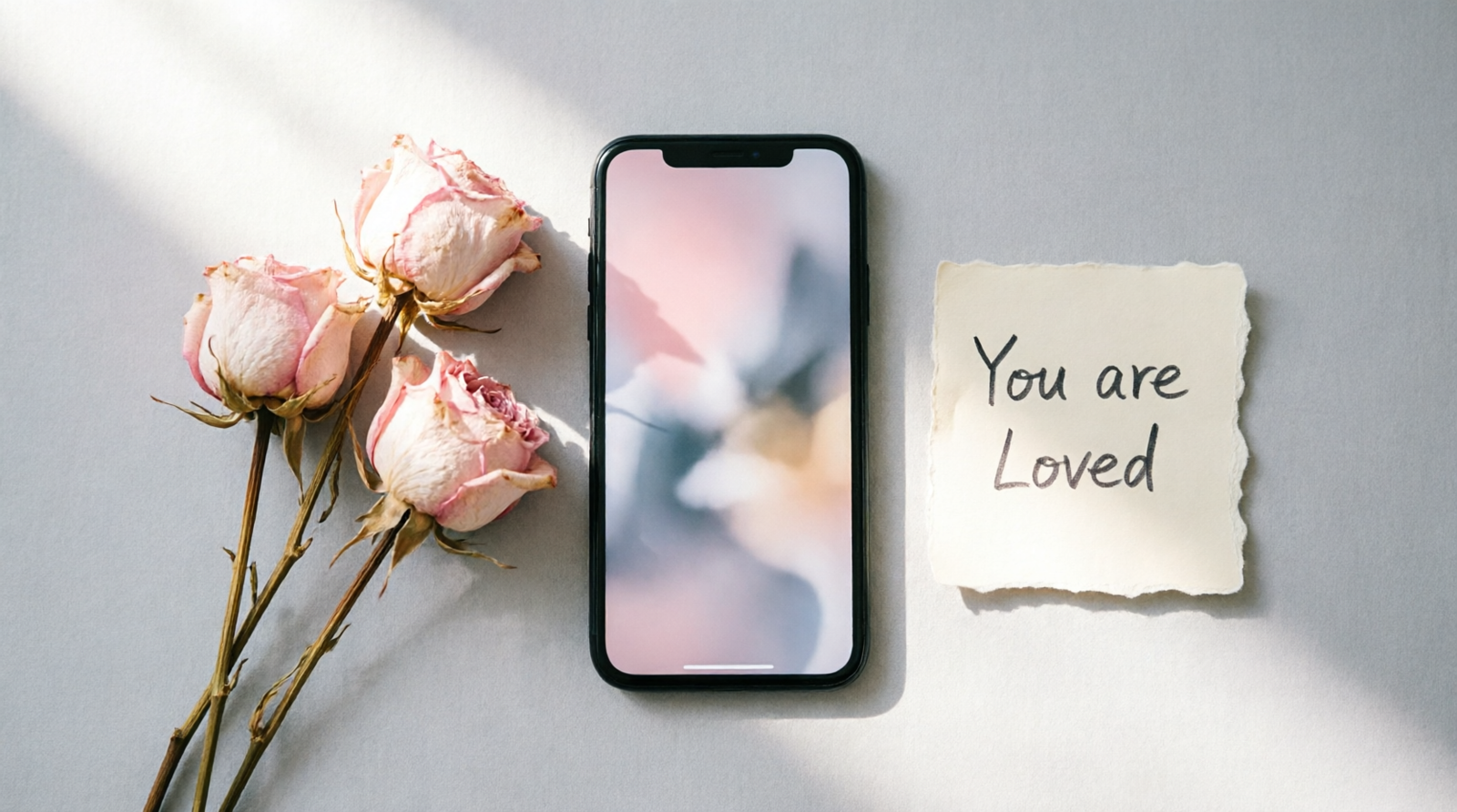
If someone sends you a message and you notice the word Loved underneath it you might wonder what they actually mean. Is it romantic? Is it friendly? Are they saying they love what you wrote or does the word simply mean they reacted positively to your message?
The answer depends on the conversation relationship and messaging app.
In everyday texting, Loved usually means that someone liked appreciated or felt positively about a message. On many messaging platforms, Loved can also appear when a person uses a heart reaction on a message. In that case it does not automatically mean they are declaring romantic love.
This small word can carry different meanings which is why context matters so much.
For example, if you text a friend, I finally passed my exam! and they respond with a heart or Loved, they are probably showing support and happiness for you. If someone you are dating reacts to a sweet personal message with a heart the same reaction could have a warmer or more romantic meaning.
So, what does loved mean in a text message? Let’s break it down in simple terms.
What Does “Loved” Mean in a Text Message?

In most texting situations, “Loved” means the person really liked, appreciated, or warmly reacted to your message.
It can communicate feelings such as:
- “I really liked this.”
- “This made me happy.”
- “I appreciate what you said.”
- “That was sweet.”
- “I agree with this.”
- “That made me smile.”
- “I support you.”
- “This is meaningful to me.”
The important thing is that “loved” does not always equal “I love you.”
Modern messaging has made reactions much more casual. A heart reaction can be used between romantic partners, close friends, relatives, coworkers, or even acquaintances.
Imagine you send:
“Good luck with your interview tomorrow!”
If the other person reacts with a heart, they may simply appreciate your encouragement.
Now imagine you send:
“I had such a wonderful time with you tonight.”
If the person responds with a heart, the reaction may carry more emotional weight.
The word itself is only part of the message. The surrounding conversation tells you what it really means.
What Does It Mean When Someone “Loved” Your Message?
When someone “loves” your message, they are generally signaling a strong positive reaction.
It is stronger than simply ignoring the message, and it can feel warmer than a basic “OK” or “Thanks.”
However, the exact meaning varies.
Someone might love a message because it was:
- Funny
- Helpful
- Kind
- Encouraging
- Interesting
- Romantic
- Sentimental
- Exciting
- Relatable
For example:
You: “Your presentation was amazing today!”
Them: ❤️
Here, the heart could mean, “Thank you, that means a lot.”
Another example:
You: “This puppy video is hilarious 😂”
Them: ❤️
This probably means, “I loved that video too.”
There is no reason to assume romance simply because a heart appears.
In digital conversations, people often use reactions as a quick way to show emotion without typing a full response.
Does “Loved” Mean Someone Is in Love With You?

Not necessarily.
This is one of the biggest misunderstandings surrounding text reactions.
If someone “loves” your message, it does not automatically mean that they are in love with you.
A heart reaction can show affection without being a romantic confession.
For instance, your sister might heart your birthday message. Your best friend might love a funny photo. A coworker might react warmly to a message thanking them for their help.
None of these situations necessarily indicate romantic feelings.
If you are trying to understand someone’s romantic interest, look at the overall pattern of communication, not one reaction.
Consider questions such as:
- Do they regularly start conversations?
- Do they make an effort to talk to you?
- Do they compliment you personally?
- Do they flirt with you?
- Do they want to spend time with you?
- Do they remember small details about you?
- Do their messages become more affectionate over time?
Those clues are much more meaningful than a single “Loved” reaction.
“Loved” vs. “Liked” in Texting
The difference between “loved” and “liked” can seem small, but many people use them to express different levels of enthusiasm.
Generally:
Liked can mean:
“I enjoyed this.”
Loved can mean:
“I really enjoyed this.”
But this is not a strict rule.
Messaging apps often give people reaction options, and users choose them quickly. Someone may select a heart because it is visually convenient rather than because they carefully considered the emotional meaning.
For example:
You: “Here are the photos from our trip.”
Friend: ❤️
They might simply mean:
“These photos are great!”
It does not necessarily mean:
“I have deep romantic feelings for you.”
Digital communication is often much less precise than face-to-face communication.
What Does a Heart Reaction Mean in Texting?
A heart reaction generally communicates warmth, appreciation, affection, or approval.
Its meaning depends heavily on the situation.
Here are a few common interpretations:
| Situation | Possible Meaning |
|---|---|
| Friend reacts to a funny message | “That was great!” |
| Family member reacts to good news | “I’m happy for you.” |
| Partner reacts to a romantic message | “I feel the same way.” |
| Coworker reacts to helpful information | “Thanks, I appreciate it.” |
| Crush reacts to a sweet message | Could indicate affection or interest |
| Someone reacts to sad news | “I care about you.” |
Notice the phrase “could mean.”
A heart reaction rarely gives enough information by itself to determine exactly what another person feels.
That is why reading the entire conversation is important.
What Does “Loved” Mean on Social Media?
On social media, “Loved” usually represents a positive emotional reaction to a post, comment, photo, video, or message.
Social platforms have trained users to communicate emotions through quick reactions.
Instead of writing:
“This is wonderful and I really enjoyed seeing it.”
Someone might simply tap a heart.
This saves time while still communicating a positive feeling.
A person might “love”:
- A friend’s wedding photo
- A funny meme
- A travel picture
- A birthday post
- A pet video
- A motivational quote
- A family announcement
- A personal achievement
Again, a heart reaction is not automatically romantic.
Social media reactions are often broader and more casual than the word love might suggest in ordinary conversation.
What Does “Loved” Mean From a Friend?
When a friend “loves” your message, it usually means they appreciate it, agree with it, or feel positively toward what you said.
For example:
You: “I saved you the last slice of pizza.”
Friend: ❤️
This probably means:
“You’re the best!”
It does not necessarily mean anything deeper.
Friends commonly use heart reactions to show gratitude, encouragement, affection, or amusement.
The closeness of the friendship can also influence the meaning.
A heart from your lifelong best friend may simply be normal communication. A heart from someone you have only recently met may feel more noticeable.
Still, it is better not to interpret one reaction in isolation.
What Does “Loved” Mean From a Guy?
If a guy “loves” your message, the meaning depends on what you said and what your relationship is like.
For example:
You: “Thanks for helping me with my project!”
Him: ❤️
This could simply mean:
“You’re welcome.”
Now consider:
You: “I really enjoyed spending time with you yesterday.”
Him: ❤️
That reaction could be more affectionate.
But even then, it does not prove romantic interest.
Look at his behavior outside that single reaction. If he frequently contacts you, makes plans, flirts, gives personal compliments, and shows consistent interest, the heart may be part of a larger pattern.
If he rarely talks to you and simply reacts to a message, it is safer to interpret the reaction as a positive response rather than a declaration of love.
What Does “Loved” Mean From a Girl?
The same basic principle applies when a girl “loves” your message.
She might be expressing:
- Appreciation
- Friendship
- Support
- Excitement
- Affection
- Agreement
- Romantic interest
The message itself matters.
Suppose you write:
“Your advice really helped me. Thank you!”
And she responds with a heart.
The most natural interpretation is probably that she appreciates the exchange.
But if you write:
“I think I’m starting to really like you.”
And she responds with a heart, the situation is different. The reaction may be acknowledging or positively responding to an emotional statement.
Even then, if you need certainty, clear communication beats guessing.
Does “Loved” Mean the Person Likes You?
It can, but it does not necessarily mean romantic attraction.
The word like itself has multiple meanings.
Someone can like you as:
- A friend
- A coworker
- A classmate
- A family member
- A romantic interest
A heart reaction tells you that the person had a positive emotional response. It does not tell you exactly which type of relationship they want.
If you are wondering whether someone has a crush on you, consider their overall behavior.
Do they:
- Look for reasons to talk to you?
- Respond consistently?
- Ask personal questions?
- Remember things you tell them?
- Try to spend time with you?
- Show interest in your life?
- Communicate differently with you than with everyone else?
A combination of these behaviors is more informative than a single reaction.
Examples of “Loved” in Different Texting Situations
Here are some simple examples to make the meaning clearer.
Example 1: Friendly Conversation
You: “I found that restaurant you were talking about.”
Friend: “Loved ❤️”
Meaning:
“I really like that!”
Example 2: Encouragement
You: “I finally finished my assignment!”
Friend: ❤️
Meaning:
“I’m happy for you!”
Example 3: Family Conversation
You: “Mom, I’ll visit this weekend.”
Mom: ❤️
Meaning:
“I’m happy to hear that.”
Example 4: Romantic Conversation
You: “I had such a lovely evening with you.”
Partner: ❤️
Meaning:
“I feel warmly about this too.”
Example 5: Funny Message
You: “I accidentally made coffee twice today. Apparently, one cup wasn’t enough. 😂”
Friend: ❤️
Meaning:
“That made me laugh.”
Example 6: Emotional Support
You: “Thank you for being there for me.”
Friend: ❤️
Meaning:
“Of course. I care about you.”
These examples show why context is essential.
Why Do People Use “Loved” Instead of Replying?
Sometimes the simplest explanation is the correct one: they do not know what else to say.
A reaction can acknowledge a message without requiring a full response.
For example:
You: “The photos came out beautifully!”
Instead of typing:
“Yes! I agree. I love them too!”
Someone may simply tap the heart reaction.
This is especially common in busy conversations.
A reaction can mean:
“I saw this.”
“I appreciate this.”
“I agree.”
“This made me happy.”
“I don’t have anything else to add, but I wanted to respond.”
So, a reaction is often a form of low-effort but meaningful acknowledgment.
Is “Loved” a Romantic Sign?
Sometimes it can be.
But it is not reliable evidence on its own.
If a person uses affectionate language, sends hearts frequently, initiates conversations, flirts, and makes an effort to see you, then a heart reaction may fit into a larger romantic pattern.
On the other hand, if they use heart reactions with everyone, then their reaction probably has a more general meaning.
This is an important point because different people have very different texting styles.
One person might use ❤️ only with a romantic partner.
Another person might send ❤️ to their friends, siblings, coworkers, and favorite memes.
Neither approach is wrong.
The safest interpretation is:
“They responded positively.”
Then use the surrounding context to understand how positive and personal that response may be.
What Does “Loved Your Message” Mean?
When a messaging platform displays something like “Loved your message,” it generally means the recipient used a heart-style reaction on your message.
The wording is often generated by the platform.
That distinction matters.
It does not necessarily mean the person typed the word “loved.”
They may have simply selected a reaction.
For example, if you send:
“Hope your day gets better ❤️”
and the app displays:
“Loved your message.”
That is essentially telling you that the recipient reacted positively to what you wrote.
The exact interface can vary between apps and devices, but the basic idea is the same: the message received a heart reaction.
“Loved” Can Mean Different Things to Different People
One reason texting can be confusing is that written communication removes many physical and vocal clues.
In a face-to-face conversation, you can hear someone’s tone and see their expression.
In a text, you may only see:
❤️
That tiny symbol has to carry a lot of emotional information.
one person, ❤️ means:
“I love you.”
another, it means:
“Thanks!”
someone else, it means:
“That’s cute.”
Another person might use it simply because they prefer hearts to thumbs-up reactions.
There is no universal dictionary that assigns one permanent meaning to every emoji or reaction.
Personal texting habits matter.
What Should You Reply When Someone “Loves” Your Message?
Usually, you do not need to reply at all.
A reaction can naturally end a conversation.
But if you want to continue talking, you can respond based on the situation.
a friend:
“Haha, I knew you’d like it!”
someone you’re dating:
“Glad you liked it ❤️”
a casual conversation:
“😊”
good news:
“I’m excited too!”
You do not need to overthink the response.
If the person has only reacted to your message, it is perfectly normal to let the conversation rest.
Should You Read Too Much Into a Heart Reaction?
Probably not.
This is perhaps the most useful advice when interpreting texting behavior.
A single heart reaction can be meaningful, but it is rarely enough to answer a big relationship question.
Instead of asking:
“They used a heart. Does that mean they love me?”
Ask:
“What does their overall communication with me look like?”
That shift gives you much better information.
Look for consistent behavior rather than isolated signals.
Someone’s actions, communication style, and willingness to spend time with you generally tell you more than one emoji.
“Loved” vs. “Love” in Text Messages
There is also a small grammatical difference between love and loved.
“Love” is present tense:
“I love this song.”
“Loved” is past tense:
“I loved the movie.”
But when a messaging app says someone “loved your message,” it is describing an action that already happened: they selected the love reaction.
It does not mean they are necessarily using “loved” as a personal statement.
For example:
“Sarah loved your message.”
This is different from Sarah directly typing:
“I love you.”
The first describes a reaction.
The second directly expresses romantic or emotional love, depending on the context.
That distinction can prevent a lot of unnecessary confusion.
Common Misunderstandings About “Loved” in Texting
There are several common assumptions worth clearing up.
Myth 1: A Heart Always Means Romance
False.
Hearts are widely used between friends, family members, and other people.
Myth 2: “Loved” Means “I Love You”
Not necessarily.
It often means the person strongly liked or appreciated the message.
Myth 3: A Heart Reaction Guarantees Attraction
No.
A reaction alone cannot prove someone’s romantic feelings.
Myth 4: “Loved” Is Always a Deep Emotional Statement
Not necessarily.
Sometimes it is simply a quick reaction to a funny picture or useful message.
Myth 5: You Must Reply to Every Reaction
No.
A reaction can naturally end a conversation.
How to Understand the Meaning From Context
If you are genuinely unsure what someone meant, examine five things.
1. Look at Your Original Message
Was it funny, romantic, supportive, practical, or emotional?
The content of your message gives the reaction its starting point.
2. Consider Your Relationship
Are you friends, coworkers, relatives, dating partners, or strangers?
The same reaction can have completely different meanings in different relationships.
3. Notice Their Normal Texting Style
Do they send hearts to everyone?
If so, a heart probably has a broad meaning for them.
4. Look at the Conversation Before and After
A reaction is easier to interpret when you can see the larger conversation.
5. Pay Attention to Consistent Behavior
Repeated actions usually provide more information than one message.
This approach helps you avoid turning a tiny digital signal into a major conclusion.
FAQs:
Does “loved” mean the person likes my message?
Usually, yes. It generally indicates that they had a positive reaction to your message and wanted to show appreciation, affection, approval, or enjoyment.
Does “loved your message” mean they are in love with me?
No. A message reaction alone does not prove romantic feelings. It can be friendly, supportive, appreciative, or romantic depending on the context.
What does a heart mean from a friend?
A heart from a friend commonly means appreciation, affection, agreement, encouragement, or that they enjoyed what you sent.
What does it mean when someone loves a text instead of replying?
They may simply be acknowledging your message without needing to write a full response. It can also mean they enjoyed the message but had nothing else to add.
Is a heart reaction a good sign?
Generally, it is a positive sign because the person chose to respond warmly. However, it does not automatically indicate romantic interest.
What does “loved” mean on Messenger or another messaging app?
It generally indicates that someone selected a love or heart reaction for your message. The exact appearance and wording can vary by platform.
Can friends use heart reactions?
Absolutely. Heart reactions are common between friends and do not automatically indicate romance.
Should I respond when someone loves my message?
You can, but you do not have to. If the reaction naturally finishes the conversation, leaving it there is completely normal.
Final Thoughts:
So what does loved mean in a text message?
In simple terms, it usually means I really liked or appreciated what you sent.
It can express warmth happiness support affection excitement gratitude or approval. Sometimes it can be romantic but sometimes it is nothin more than a friendly reaction.
The biggest mistake is assuming that one word emoji or reaction has the same meaning in every conversation.
Context is everything.
Think about what you wrote, who responded how they normally communicate and what their behavior looks like overall. If the person consistently shows affection and romantic interest, a heart reaction may be part of that pattern. If they use hearts casually with everyone it probably has a much simpler meaning.
In the world of texting small reactions can carry emotion without carrying a precise definition. A heart can say thanks that’s sweet I agree I care that’s funny or sometimes I love you.
That is why the best way to understand a text reaction is not to focus on the single word loved. Look at the entire conversation.
When in doubt remember the simplest interpretation first:
They liked your message enough to react positively.
DISCOVER MORE POST:
| https://learnztext.com/what-does-glmr-mean-in-text/ |
| https://learnztext.com/what-does-ed-mean-in-text/ |
| https://learnztext.com/what-does-wpu-mean-in-text/ |

Alina is a passionate English language writer, educator, and content creator with over 5 years of experience in English learning, vocabulary, word meanings, grammar, writing, and everyday language.
As the author at LearnzText, Alina creates clear, helpful, and easy-to-understand content for readers who want to improve their English and better understand words, phrases, expressions, and language usage. Her goal is to make learning English simple, practical, and enjoyable for everyone.
 Zeya Mark
 Nira Mark
[…] https://learnztext.com/what-does-loved-mean-in-a-text-message/ […]