
If someone texts you yes yes you might wonder why they said yes twice. Is the person excited? Annoyed? Being sarcastic? Or simply trying to show that they understood?
The truth is that yes yes can have several meanings in text messages and the right interpretation usually depends on the conversation punctuation and the relationship between the people texting.
In many everyday conversations, repeating yes is simply a way to sound enthusiastic confirm something strongly or show that the person is paying attention. For example if a friend asks Are you coming tonight? and you reply, Yes yes you are probably showing excitement and certainty.
However yes yes can also sound impatient or dismissive in certain situations. A reply such as Yes yes I know can mean something very different from a cheerful Yes yes! Let’s go!
This guide explains what yes yes means in text, how people use it on social media what different versions can imply and how to respond without misunderstanding the tone.
What Does “Yes Yes” Mean in Text?
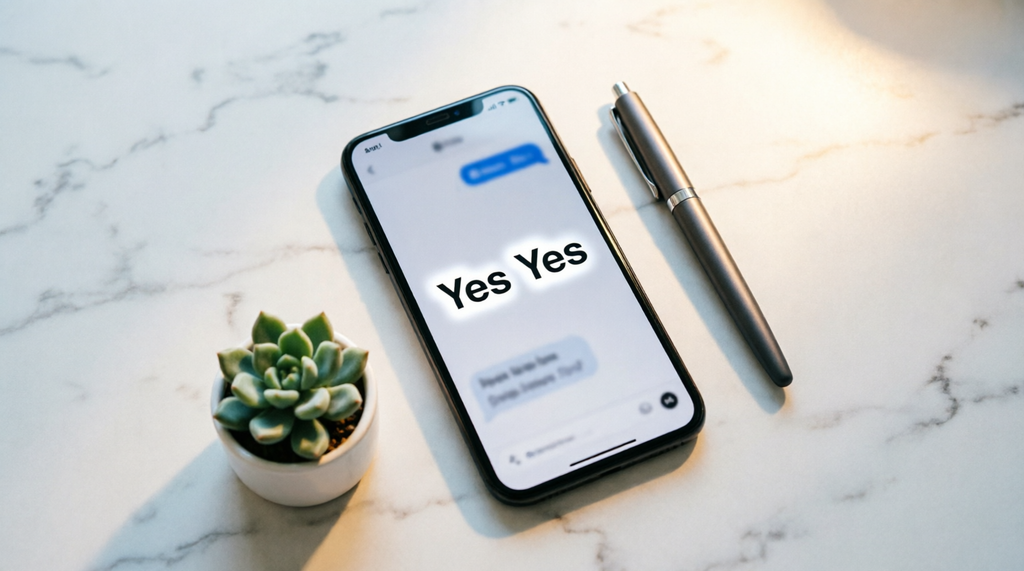
Generally, “yes yes” means a strong or repeated agreement.
It can communicate:
- Strong confirmation
- Enthusiasm
- Excitement
- Understanding
- Agreement with an idea
- Reassurance
- Impatience, depending on context
- Sarcasm in some conversations
The repeated word adds emphasis. Think of it as putting extra energy behind the answer.
For example:
Person A: “You remembered to bring the tickets, right?”
Person B: “Yes yes!”
Here, the repeated “yes” probably means, “Yes, definitely. I remembered.”
But consider this:
Person A: “You need to finish this before lunch.”
Person B: “Yes, yes, I know.”
This version can sound impatient, as if the person is saying, “I heard you already.”
So, when someone sends “yes yes,” don’t interpret the words alone. Look at the whole conversation.
Why Do People Say “Yes” Twice?
Repeating a word is common in informal digital communication because texting does not include facial expressions, gestures, or vocal tone.
When people speak, they can emphasize a word with their voice.
For example:
“Yes!”
can sound excited when spoken loudly.
In a text message, someone may write:
“Yes yes!”
to create some of that same emphasis.
Repeating “yes” can therefore make a short response feel more expressive.
It may also be a habit influenced by casual speech, online conversations, or the person’s individual texting style.
Sometimes people simply repeat words because it feels friendly and natural.
“Yes Yes” Usually Means Strong Agreement
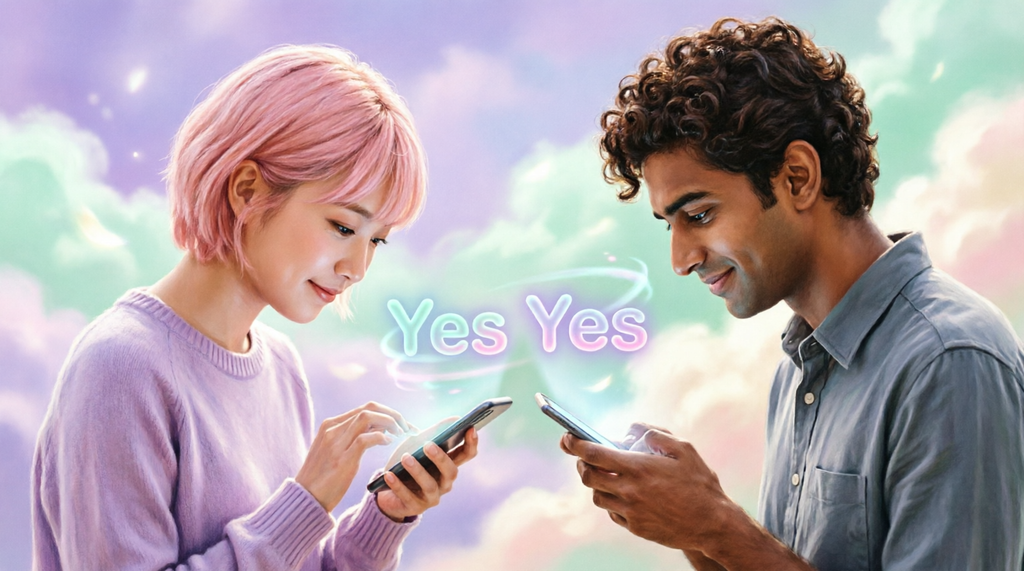
One of the most common interpretations is straightforward agreement.
If somebody suggests an idea and you answer “yes yes,” you’re usually agreeing with them.
For example:
Friend: “Let’s order pizza tonight.”
You: “Yes yes! 🍕”
That response probably means:
“Absolutely!”
or
“Yes, I’m totally in.”
The repetition gives the answer more energy than a plain “yes.”
This is especially common when someone is excited about an activity, plan, food, trip, event, or good news.
“Yes Yes” Can Mean “I Understand”
Another common meaning is acknowledgment.
Someone might say:
“Yes yes, I understand.”
In this case, the person isn’t necessarily excited. They are confirming that they heard and understood what was said.
For example:
“The meeting starts at 9, not 10.”
“Yes yes, got it.”
Here, “yes yes” is closer to:
“Okay, I understand.”
The surrounding words make the meaning much clearer.
When “Yes Yes” Sounds Excited
Tone matters enormously in texting.
A message such as:
“Yes yes!!! 😍”
is usually enthusiastic.
The exclamation marks and emoji make the emotion obvious.
You might see this kind of response when someone receives good news:
“We got tickets!”
“Yes yes!!! 🎉”
In that situation, the repeated “yes” is positive and energetic.
The person is probably celebrating rather than simply confirming information.
When “Yes Yes” Sounds Impatient
The same two words can have a completely different tone.
Imagine someone repeatedly explaining something you already understand:
“Remember, you have to send the form before Friday.”
“Yes, yes, I know.”
That response can sound impatient.
Here, “yes, yes” may communicate:
“I already understand. You don’t need to keep explaining.”
Punctuation can make this interpretation stronger.
Compare:
“Yes yes! 😊”
with:
“Yes, yes. I know.”
The first sounds enthusiastic.
The second may sound irritated or dismissive.
This is why context is more important than the words themselves.
Does “Yes Yes” Mean Someone Is Happy?
Not necessarily.
“ Yes yes” can indicate happiness, but it doesn’t automatically mean the person is happy.
For example:
“Are you okay with the new schedule?”
“Yes yes.”
That could simply mean:
“Yes, that’s fine.”
On the other hand:
“We finally got the house!”
“Yes yes!!!”
clearly sounds celebratory.
The subject of the conversation, punctuation, emojis, and previous messages all help determine the emotional tone.
What Does “Yes Yes!” Mean?
Adding an exclamation mark generally makes the message sound more energetic.
“Yes!” = agreement or confirmation.
“Yes yes!” = stronger or more enthusiastic agreement.
For example:
“Do you want to go shopping?”
“Yes yes!”
This likely means:
“Definitely! I’d love to.”
Multiple exclamation marks can increase the energy even further:
“Yes yes!!!”
That usually feels playful, excited, or highly enthusiastic in casual texting.
Still, tone can vary from person to person.
What Does “Yes Yes 😊” Mean?
An emoji can soften the message.
“Yes yes 😊” often sounds friendly, warm, and positive.
The smile suggests that the person isn’t simply giving a dry confirmation.
For example:
“I’ll see you tomorrow?”
“Yes yes 😊”
This can feel reassuring and pleasant.
Of course, emojis aren’t universal. Someone who rarely uses emojis may communicate differently from someone who puts emojis in nearly every message.
What Does “Yes Yes 😂” Mean?
When “yes yes” is followed by a laughing emoji, the message may be playful.
For example:
“You really ate the whole cake?”
“Yes yes 😂”
The person may be joking, laughing at themselves, or responding playfully.
The 😂 emoji suggests that the response shouldn’t necessarily be read as serious.
It could also be used after an obviously funny statement:
“We’re definitely making healthy choices tonight.”
“Yes yes 😂”
In that context, the repeated “yes” may actually be part of the joke.
What Does “Yes Yes” Mean on Social Media?
On social media, “yes yes” often works as an informal expression of agreement or approval.
You might see it in comments, direct messages, group chats, or replies.
For example:
“This is the best song on the album.”
“Yes yes!”
The commenter is essentially saying:
“I completely agree.”
It can also be used to support an opinion:
“Everyone needs a vacation sometimes.”
“Yes yes 🙌”
Here, the phrase is similar to:
“Absolutely.”
Social media encourages short, expressive replies, so repeated words can be useful for showing emotion without writing a long response.
“Yes Yes” vs. “Yes”
There is a subtle difference between the two.
| Text | Possible Feeling |
|---|---|
| Yes | Neutral agreement |
| Yes! | Enthusiastic agreement |
| Yes yes | Strong confirmation or emphasis |
| Yes yes! | Excited agreement |
| Yes yes 😊 | Friendly agreement |
| Yes yes 😂 | Playful agreement |
| Yes, yes. | Potentially impatient |
| Yes, yes, I know. | Possibly annoyed or dismissive |
| YES YES! | Very excited emphasis |
These aren’t fixed rules.
Texting style varies from person to person, but the table gives you a useful starting point.
Can “Yes Yes” Be Sarcastic?
Yes.
Like many short phrases, “yes yes” can be sarcastic when the surrounding context suggests it.
Imagine someone says:
“I promise I’ll be on time this time.”
Their friend replies:
“Yes yes 😂”
That could mean:
“Sure… we’ll see about that.”
The person isn’t necessarily agreeing sincerely. They’re joking about the friend’s history of being late.
Sarcasm often depends on shared knowledge between the people involved.
That’s why the same message can be funny between close friends but confusing between strangers.
What Does “Yes Yes, I Know” Mean?
This is one of the more important variations to understand.
“Yes yes, I know” often means that the person already understands what you’re telling them.
Depending on the tone, it can be neutral or irritated.
For example:
“Don’t forget to lock the door.”
“Yes yes, I know.”
The reply could mean:
“Don’t worry. I remember.”
But it might also mean:
“You’ve already told me that.”
If you’re unsure, don’t immediately assume the person is angry. Some people naturally use repeated words when acknowledging information.
What Does “Yes Yes Yes” Mean?
Adding a third “yes” usually increases the intensity.
“Yes yes yes!”
often means:
“Absolutely!”
or
“Definitely!”
It is especially common when someone is excited.
For example:
“Want to get ice cream?”
“Yes yes yes! 🍦”
There’s little ambiguity there. The person is excited about the idea.
However, repeated words can also be exaggerated for humor.
“Are you finally going to clean your room?”
“Yes yes yes 😂”
The laughing emoji could suggest that the answer is playful rather than serious.
Does “Yes Yes” Mean “Of Course”?
Sometimes.
If someone asks a question where the answer seems obvious, “yes yes” can function like “of course.”
For example:
“Are you coming with us?”
“Yes yes!”
This could mean:
“Of course I’m coming.”
The exact meaning depends on the situation and relationship.
If the conversation is casual and friendly, it is usually safe to interpret the phrase as positive unless other clues suggest otherwise.
Is “Yes Yes” Rude?
Not inherently.
The phrase itself is not normally rude.
However, punctuation and context can make it sound dismissive.
Compare:
“Yes yes! Thanks for reminding me 😊”
with:
“Yes, yes. Whatever.”
The first is friendly.
The second is clearly dismissive.
This illustrates an important rule of texting: short phrases don’t carry tone by themselves.
You need to consider what happened before the message and what follows afterward.
How to Respond to “Yes Yes”
Your response should depend on the context.
If someone says:
“Yes yes!”
after agreeing with your plan, you can simply continue the conversation.
For example:
“Great! I’ll see you at 7.”
If they seem excited, you can match their energy:
“Awesome! 😄”
If you’re unsure whether they’re being sarcastic or annoyed, you don’t necessarily need to confront them. Just look at the surrounding conversation first.
If their reply seems unclear, a simple follow-up can help:
“Haha, is that a yes? 😄”
This keeps the conversation light while checking what they mean.
Examples of “Yes Yes” in Text Conversations
Here are some realistic examples showing how the phrase can change meaning.
Example 1: Excitement
A: “We’re going to the beach tomorrow!”
B: “Yes yes! 🌊”
Meaning: I’m excited and definitely want to go.
Example 2: Agreement
A: “This restaurant is really good.”
B: “Yes yes!”
Meaning: I completely agree.
Example 3: Understanding
A: “The deadline is Monday.”
B: “Yes yes, I remember.”
Meaning: I understand and remember.
Example 4: Impatience
A: “You need to bring your ID.”
B: “Yes, yes, I know.”
Meaning: I already know; you don’t need to remind me again.
Example 5: Playful Sarcasm
A: “I definitely won’t eat all the snacks this time.”
B: “Yes yes 😂”
Meaning: I’m jokingly pretending to believe you.
Example 6: Celebration
A: “We won!”
B: “YES YES YES!!! 🎉”
Meaning: I’m extremely excited.
Why Context Matters So Much in Texting
Face-to-face conversations provide many clues.
You can hear someone’s voice, notice their facial expression, and observe their body language.
Texting removes most of those signals.
That means a simple phrase like “yes yes” can become ambiguous.
For example, imagine hearing someone say:
“Yes, yes, I know.”
Their voice might immediately tell you whether they’re joking, annoyed, excited, or calm.
In a text, you only see the words.
That’s why people use punctuation, emojis, capitalization, GIFs, and additional words to clarify emotion.
Even then, misunderstandings can happen.
The safest approach is to consider the entire conversation instead of analyzing one phrase in isolation.
Regional and Personal Differences in Texting
Another reason “yes yes” can be confusing is that texting habits differ between people and cultures.
Some people naturally repeat words for emphasis.
Others prefer short replies such as:
“Yep.”
“Yeah.”
“Definitely.”
“Of course.”
Someone who frequently writes “yes yes” may not intend any hidden message at all.
It could simply be part of their normal communication style.
This is especially important when communicating with someone whose language background or texting habits differ from yours.
A phrase that feels unusual to one person may be completely ordinary to another.
“Yes Yes” in Group Chats
In group chats, repeated agreement can be useful because conversations move quickly.
Suppose someone suggests:
“Pizza at 8?”
One person might respond:
“Yes!”
Another might write:
“Yes yes 🍕”
Both are agreeing, but the second response may feel slightly more enthusiastic or playful.
Group chats often encourage this kind of informal communication because people don’t want to write lengthy responses.
“Yes Yes” in Professional Messages
In professional communication, it’s usually better to be more precise.
Although “yes yes” may be perfectly normal between friends, it can sound overly casual in a workplace conversation.
Instead of:
“Yes yes, I’ll do it.”
you might write:
“Yes, I’ll take care of it.”
or:
“Yes, understood. I’ll complete it today.”
The issue isn’t that “yes yes” is grammatically wrong. It’s simply that professional communication often benefits from clearer wording.
For casual messages, however, repetition is perfectly natural.
Is “Yes Yes” a Good Thing?
Most of the time, yes.
When used positively, it can make a message sound more energetic and expressive.
It can communicate:
- “Absolutely.”
- “Definitely.”
- “I agree.”
- “I understand.”
- “I’m excited.”
- “Of course.”
The only potential problem is tone ambiguity.
If you receive “yes yes” and can’t tell whether the person is excited or annoyed, look at their other messages and the context.
One phrase rarely tells the whole story.
Quick Guide to Understanding “Yes Yes”
If you’re trying to decode a message quickly, use this simple guide:
→ Probably enthusiastic agreement.
😊” → Usually friendly and positive.
😂 → Probably playful or humorous.
→ Strong excitement or emphasis.
I know.” → Could indicate impatience.
definitely.” → Strong confirmation.
okay.” → Agreement or acknowledgment, depending on context.
→ Very enthusiastic or exaggerated agreement.
These interpretations aren’t absolute but they’re useful clues.
FAQs:
Is “yes yes” positive in texting?
Usually, yes. It commonly expresses agreement, enthusiasm, or confirmation. The exact tone depends on the conversation and punctuation.
Does “yes yes” mean “definitely”?
It can. In many casual conversations, repeating “yes” is similar to saying “definitely,” “absolutely,” or “of course.”
Can “yes yes” mean someone is annoyed?
Yes. A phrase such as “Yes, yes, I know” can sound impatient when someone feels they have already heard the information.
Is “yes yes” rude?
Not by itself. It is generally informal rather than rude. Context, punctuation, and additional words can make it sound dismissive.
What does “yes yes!” mean from a friend?
From a friend, it often means enthusiastic agreement. For example, “Yes yes! Let’s do it!” usually communicates excitement.
What does “yes yes 😂” mean?
It usually suggests a playful or humorous response. The laughing emoji can indicate that the person is joking or not taking the statement completely seriously.
Should I use “yes yes” in a professional text?
You can, but clearer wording is usually better in professional communication. “Yes, understood” or “Absolutely, I’ll handle it” sounds more polished.
Is “yes yes” the same as “yes”?
Not exactly. Both can express agreement, but repeating “yes” often adds emphasis, energy, enthusiasm, or acknowledgment.
Can “yes yes” be sarcastic?
Yes. Like many informal phrases, it can be sarcastic when the context suggests the person doesn’t literally mean what they’re saying.
What is the simplest meaning of “yes yes”?
The simplest interpretation is strong agreement or confirmation. If there are no other clues suggesting sarcasm or annoyance, that’s usually the safest interpretation.
Final Answer:
So what does yes yes mean in text?
Most commonly it means strong agreement confirmation acknowledgment or enthusiasm. Repeating yes adds emphasis and can make a simple answer feel more expressive.
In a friendly conversation, yes yes often means something like absolutely! definitely! or I’m totally in!
However, context can change the tone. Yes yes I know may sound impatient, while yes yes can be playful or sarcastic.
The best way to understand the phrase is to look at the complete conversation including punctuation emojis and the relationship between the people involved.
In other words don’t overthink the repeated yes. Most of the time it is simply a casual way to agree more strongly or add a little personality to a text message.
DISCOVER MORE POST:
| https://learnztext.com/what-does-purple-text-mean-in-gmail/ |
| https://learnztext.com/what-does-omh-mean-in-text/ |
| https://learnztext.com/what-does-hys-mean-in-text-slang/ |

Alina is a passionate English language writer, educator, and content creator with over 5 years of experience in English learning, vocabulary, word meanings, grammar, writing, and everyday language.
As the author at LearnzText, Alina creates clear, helpful, and easy-to-understand content for readers who want to improve their English and better understand words, phrases, expressions, and language usage. Her goal is to make learning English simple, practical, and enjoyable for everyone.
 Zeya Mark
 Nira Mark
[…] https://learnztext.com/what-does-yes-yes-mean-in-text/ […]
[…] https://learnztext.com/what-does-yes-yes-mean-in-text/ […]