If you received a text containing “MDD” and wondered what it meant, you are not alone. Three letters can carry very different meanings depending on the conversation, the person using them, and the platform where you saw them.
The important thing to know is that MDD is not a universal texting slang term with only one definition. In many conversations—especially those involving health or personal experiences—it means Major Depressive Disorder. In other contexts, the abbreviation can refer to something completely different.
MDD is also not quite like common texting shortcuts such as “LOL,” “BRB,” or “IDK.” Its most established meaning is a medical abbreviation, although people may use it casually in texts, DMs, forums, and social media conversations.
So, what does MDD mean in text? Usually, you need to look at the surrounding message to know for sure.
This guide explains the most common meaning, how people use it online, examples of MDD in conversations, alternative meanings, and how to respond when someone sends it to you.
What Does MDD Mean in Text?
In text messages, MDD most commonly stands for “Major Depressive Disorder.” It is a clinical term used for a depressive disorder that can affect a person’s mood, interest in activities, energy, concentration, sleep, appetite, and everyday functioning.
The abbreviation is widely recognized in medical and mental-health contexts. For example, a message saying:
“My doctor diagnosed me with MDD.”
almost certainly uses MDD to mean Major Depressive Disorder.
Similarly:
“I’ve been struggling with my MDD lately.”
is probably referring to a person’s experience with the condition.
MDD is listed as an abbreviation for major depressive disorder by established dictionary and medical references.
However, context matters. MDD can have other meanings in specialized fields, so you should not automatically assume that every appearance of the abbreviation refers to mental health.
Quick answer
| Term | Most common meaning | Typical context |
|---|---|---|
| MDD | Major Depressive Disorder | Mental health, personal texts, medical conversations |
| MDD | Mal de Débarquement / related syndrome terminology | Travel or medical discussions |
| MDD | Manufacturing Due Date | Business, production, or workplace conversations |
| MDD | Other specialized abbreviations | Technical, professional, or organizational contexts |
If someone uses MDD in an ordinary personal conversation, the surrounding words usually make the intended meaning clear.
Is MDD a Texting Slang Word?
Not exactly.
MDD is better described as an abbreviation or acronym than traditional internet slang.
Words such as “LOL,” “OMG,” “TBH,” and “IDK” were strongly shaped by casual digital communication. MDD, by contrast, existed as a professional abbreviation because healthcare professionals needed a shorter way to refer to Major Depressive Disorder.
Over time, people began using medical terms and abbreviations in everyday digital conversations. Someone discussing their diagnosis in a text message may naturally type “MDD” rather than writing the complete phrase every time.
For example:
“I’ve been dealing with MDD for a while.”
is simply faster than:
“I’ve been dealing with Major Depressive Disorder for a while.”
That does not turn MDD into slang in the strict linguistic sense. It simply means a formal abbreviation has entered casual online communication.
What Does MDD Mean in a Chat?
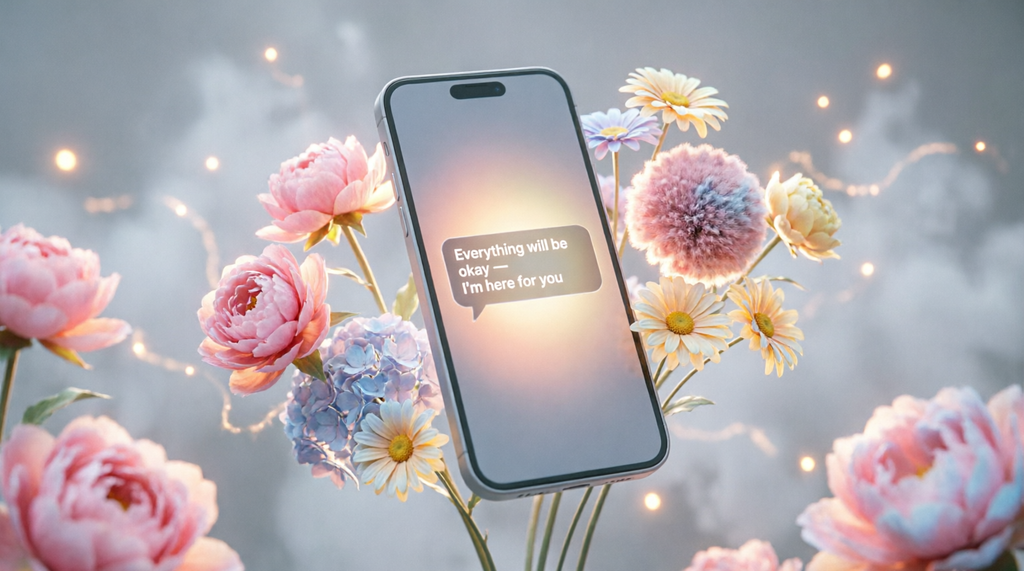
When MDD appears in a chat about emotions, therapy, depression, medication, mental health, or personal struggles, it almost certainly means Major Depressive Disorder.
Consider this conversation:
Sam: “You’ve seemed really quiet lately. Everything okay?”
Alex: “I’ve been having a rough time with my MDD.”
Here, the meaning is clear from the emotional context.
Another example:
Jamie: “Why have you been going to therapy?”
Taylor: “I was diagnosed with MDD last year.”
Again, MDD refers to Major Depressive Disorder.
The abbreviation can make serious conversations feel slightly easier to type, particularly when someone has already explained what it means.
What Is Major Depressive Disorder?
Major Depressive Disorder, commonly abbreviated as MDD, is a recognized mental health condition. It is more specific than simply saying someone feels sad.
A person can have a difficult day, feel disappointed, experience grief, or temporarily lose motivation without having MDD.
A clinical diagnosis involves a broader pattern of symptoms and their effect on everyday life. Medical sources describe MDD as involving symptoms such as persistent depressed mood or loss of interest, along with possible changes in sleep, appetite, energy, concentration, and other areas of functioning.
This distinction matters when interpreting texts.
If someone writes:
“I’m depressed because my team lost.”
that does not automatically mean they have MDD.
If they write:
“I was diagnosed with MDD.”
they are referring to a specific clinical diagnosis.
In other words, MDD should not be treated as a casual synonym for having a bad mood.
Examples of MDD in Text Messages
Seeing realistic examples can make the meaning much easier to understand.
Example 1: Talking About a Diagnosis
Person A: “Did you ever figure out what was going on?”
Person B: “Yeah, my doctor diagnosed me with MDD.”
Meaning: MDD means Major Depressive Disorder.
Example 2: Discussing Mental Health
Person A: “How have you been feeling lately?”
Person B: “Honestly, my MDD has been difficult to manage.”
Here, the abbreviation refers to the person’s diagnosed mental health condition.
Example 3: Talking About Treatment
Person A: “Why are you seeing a therapist?”
Person B: “I’m getting help for MDD.”
Again, the context clearly points toward Major Depressive Disorder.
Example 4: An Online Support Conversation
Person A: “Has anyone else experienced this after an MDD diagnosis?”
Person B: “Yes, talking with a professional helped me understand it better.”
The surrounding conversation makes the intended meaning clear.
Example 5: A Short Personal Message
“Sorry I didn’t reply. I’ve been dealing with my MDD and needed some time offline.”
In this situation, MDD is clearly being used as a mental-health abbreviation.
What Does MDD Mean on Social Media?
On social media, MDD can appear in posts, comments, direct messages, forums, and support communities.
When the conversation concerns mental health, depression, therapy, diagnosis, or emotional wellbeing, MDD generally means Major Depressive Disorder.
For example, someone might write:
“Living with MDD can be exhausting.”
Or:
“I’m learning more about MDD.”
Or:
“My experience with MDD has taught me to ask for help.”
Social platforms make it easier for people to discuss subjects that were once considered private. As a result, medical abbreviations can appear in ordinary conversations more frequently.
Still, there is an important rule: never assume the meaning based only on the three letters.
Look at the rest of the post.
How to Figure Out the Meaning of MDD
The easiest way to understand an abbreviation is to examine the words around it.
Ask yourself three simple questions:
1. What is the conversation about?
If the conversation involves depression, therapy, diagnosis, emotions, or mental health, MDD probably means Major Depressive Disorder.
If it involves factories, orders, manufacturing, or deadlines, it could mean something else.
2. Who is using it?
A doctor, therapist, patient, or mental-health community member may use MDD as a clinical abbreviation.
A manager or production employee may use the same letters differently.
3. What words appear nearby?
Look for clues.
For example:
- “diagnosed with MDD” → Major Depressive Disorder
- “treatment for MDD” → Major Depressive Disorder
- “my MDD symptoms” → Major Depressive Disorder
- “MDD for this production batch” → potentially a business-specific meaning
Context usually solves the mystery.
Can MDD Mean Something Other Than Major Depressive Disorder?
Yes.
Abbreviations are not unique codes. The same three letters can represent completely different things in different industries.
One abbreviation reference lists numerous meanings for MDD, including Major Depressive Disorder, Medical Device Directive, McDonnell Douglas, and several technical or organizational terms.
That does not mean all of these meanings are common in texting.
They are mostly context-specific meanings.
For everyday online conversations, Major Depressive Disorder is one of the most important interpretations to know. But if the message is clearly about another subject, the intended definition may be different.
MDD in a Medical Conversation
Medical conversations are where MDD has one of its clearest meanings.
A healthcare professional may write “MDD” in clinical documentation instead of repeatedly writing the full term. You might see it in medical records, psychiatric notes, treatment documentation, or educational material.
For example:
“History of MDD.”
This means the person has a history of Major Depressive Disorder.
Or:
“Treatment for MDD.”
This refers to treatment for Major Depressive Disorder.
If you see MDD in a medical document, it is best to confirm the meaning with the healthcare professional responsible for the document rather than relying on internet slang definitions.
Medical abbreviations can have specialized meanings, and the surrounding information is important.
MDD vs. Simply Feeling Sad
This is one of the most important distinctions to understand.
People sometimes use “depression” casually to describe sadness, disappointment, boredom, or frustration. But Major Depressive Disorder is a clinical diagnosis, not simply a label for having a bad day.
MDD involves a specific pattern of symptoms that can significantly affect everyday functioning. Clinical diagnostic criteria consider factors such as duration, number of symptoms, severity, and functional impact.
So these two statements are not necessarily equivalent:
“I’m depressed because I failed my exam.”
and:
“I have been diagnosed with MDD.”
The first may describe a temporary emotional reaction. The second refers to a clinical condition.
That distinction is particularly important when discussing mental health online.
Why Do People Use MDD Instead of the Full Phrase?
There are several simple reasons.
It is shorter
Typing three letters is easier than typing “Major Depressive Disorder” repeatedly.
It is already understood in some communities
People who frequently discuss mental health may already recognize the abbreviation.
It can make conversations more concise
Someone explaining their health history may use MDD alongside other established medical abbreviations.
It can feel less formal
A person may find it easier to write “MDD” in a personal message than repeatedly spell out the full diagnosis.
However, this does not mean everyone will understand the abbreviation.
If you are messaging someone who may not know what it means, spelling it out the first time can help.
For example:
“I was diagnosed with Major Depressive Disorder (MDD).”
After that, using “MDD” makes sense.
How Should You Reply When Someone Says “MDD”?
Your response should depend on the context.
If someone tells you:
“I have MDD.”
they may be sharing something personal and serious.
You do not need to produce a perfect response. A simple, respectful reply is often enough.
You could say:
- “I’m sorry you’re dealing with that.”
- “Thanks for telling me.”
- “I’m here if you want to talk.”
- “I hope you’re getting the support you need.”
- “Would you like to talk about it?”
The key is not to make assumptions or minimize what they are saying.
Avoid responding with jokes simply because the conversation is happening through text.
If someone appears to be in immediate danger or talks about suicide or self-harm, ordinary texting etiquette is no longer the main concern. Encourage them to contact emergency services, a crisis service available in their country, or a trusted person who can help them stay safe.
Is MDD Used on TikTok, Instagram, or WhatsApp?
It can be.
There is no single platform-specific meaning of MDD. You may encounter the abbreviation on:
- TikTok
- Discord
- Private messaging apps
- Online health communities
But the topic of the conversation matters more than the platform.
For example, MDD in an Instagram post about mental health is likely to mean Major Depressive Disorder.
MDD in a WhatsApp group discussing manufacturing deadlines could mean something completely different.
The platform alone does not determine the definition.
MDD vs. Similar Mental Health Abbreviations
If you’re learning internet and medical terminology, you may encounter other abbreviations alongside MDD.
For example:
| Abbreviation | Common meaning |
|---|---|
| MDD | Major Depressive Disorder |
| ADHD | Attention-Deficit/Hyperactivity Disorder |
| OCD | Obsessive-Compulsive Disorder |
| PTSD | Post-Traumatic Stress Disorder |
| BPD | Borderline Personality Disorder |
| GAD | Generalized Anxiety Disorder |
These abbreviations can appear in online conversations, but they should not automatically be treated as casual slang.
Many originated as clinical terminology and have specific meanings.
Common Mistakes People Make With MDD
Understanding the abbreviation is only half the job. Using it correctly matters too.
Mistake 1: Assuming every MDD means depression
Context can change the meaning.
Mistake 2: Treating MDD as ordinary sadness
Major Depressive Disorder is a clinical term, not simply another word for feeling unhappy.
Mistake 3: Diagnosing someone from a text
If someone says they feel depressed, you cannot determine from a message whether they have MDD.
Mistake 4: Making jokes about the abbreviation
If someone is discussing their diagnosis, responding with insensitive humor can make the conversation uncomfortable or harmful.
Mistake 5: Assuming everyone knows the abbreviation
Even common medical abbreviations can be unfamiliar to people outside healthcare or mental-health communities.
What Does “I Have MDD” Usually Mean?
When someone says “I have MDD,” the most likely interpretation is:
“I have been diagnosed with Major Depressive Disorder.”
It is a statement about a mental-health condition.
However, you should remember that people communicate differently. Some may use the abbreviation loosely, while others may be referring to a formal diagnosis.
If you need clarification, there is nothing wrong with asking:
“When you say MDD, do you mean Major Depressive Disorder?”
A respectful question is better than confidently misunderstanding someone.
What Does MDD Mean in a Business Context?
Outside mental health, MDD can appear in professional environments.
For example, an abbreviation database lists numerous non-medical uses of MDD.
If someone writes:
“What is the MDD for this order?”
in a production or manufacturing conversation, the abbreviation may have a company-specific or industry-specific meaning.
That is why a good rule is:
Never interpret an abbreviation without considering the subject of the conversation.
A three-letter abbreviation does not have one permanent meaning across every industry.
Is “MDD” the Same as “Depression”?
Not exactly.
In everyday conversation, people may use “depression” as a broad term. MDD is a specific clinical diagnosis.
Medical sources distinguish MDD from ordinary sadness and other forms of emotional distress.
This difference is especially important for SEO content and social media explanations because readers may encounter these terms without understanding the distinction.
If someone says, “I’m feeling depressed,” it does not automatically mean they have MDD.
If someone says, “I was diagnosed with MDD,” they are referring to a specific disorder.
FAQs:
What does MDD mean in a text message?
Most commonly, MDD means Major Depressive Disorder when the conversation involves mental health, depression, diagnosis, therapy, or symptoms.
Is MDD texting slang?
Not really. MDD is primarily an abbreviation used in medical and other specialized contexts. People may use it casually in texts and social media, but it is not traditional internet slang like LOL or BRB.
What does MDD mean on social media?
On social media, MDD often means Major Depressive Disorder when the post or conversation is about mental health. Other meanings are possible when the topic is business, technology, medicine, or another specialized field.
Can MDD have other meanings?
Yes. MDD has multiple meanings across different fields. The correct definition depends on context.
Does MDD mean major depression?
Usually, when people use MDD in a mental-health context, they are referring to Major Depressive Disorder. “Major depression” is also commonly used as a shorter description.
Should I ask someone what MDD means?
Yes. If the context is unclear, asking politely is completely reasonable.
You can simply say:
“What do you mean by MDD?”
There is no need to guess.
Is MDD a serious term?
When MDD refers to Major Depressive Disorder, yes. It is a clinical mental-health term and should not be treated as a joke or casual diagnosis.
Can someone use MDD in a casual text?
Yes. Someone who has already discussed their diagnosis may naturally use the abbreviation in everyday messages.
Final Takeaway:
So what does MDD mean in text?
In a conversation about mental health MDD most commonly means Major Depressive Disorder. It is a clinical abbreviation that people may also use in texts direct messages online communities and social media.
But MDD does not have only one possible definition. The abbreviation can represent different terms in medical, business, technical and other professional settings. That is why context is the best clue.
If you see phrases such as diagnosed with MDD reatment for MDD or my MDD symptoms the meaning is almost certainly Major Depressive Disorder.
If the conversation is about manufacturing technology travel,or another specialized subject check the surrounding words before deciding what MDD means.
DISCOVER MORE POST:
| https://learnztext.com/what-does-dyw-mean-in-text/ |
| https://learnztext.com/what-does-yes-yes-mean-in-text/ |
| https://learnztext.com/what-does-mtsm-mean-in-text/ |

Zeya is an experienced English language writer, researcher, and content creator with over 5 years of experience in writing about words, phrases, slang, abbreviations, texting language, internet expressions, and everyday English communication.
As a dedicated author at LearnzText, Zeya focuses on making confusing words, short forms, slang terms, and modern expressions easy to understand. Her writing combines careful research with simple, natural explanations so readers can quickly discover what a word or phrase means, how it is used, and what it means in different conversations and social media contexts.
 Nira Mark
 Alina Mark