
If someone sends you a message saying pin this I’ll pin it or simply mentions pin you might wonder what they mean. The word can have several meanings in texting and online conversations me thing in an easy-to-find place. For example someone may ask you to pin an important message so you can find it later.
On apps such as messaging platforms and social networks pinning can also mean placing a conversation post comment or piece of content at the top of a page.
However, PIN can mean something completely different when it is written in a banking phone or security context. In that case, it usually means Personal Identification Number such as the number you enter to unlock a device or complete a transaction.
So, what does pin mean in text? The short answer is: it usually means to save attach or keep something easily accessible but context matters.
Let’s look at the different meanings examples and situations where you are likely to see this word online.
What Does “Pin” Mean in Text?
In texting and online conversations, pin commonly means to save something important so it stays easy to find.
For example:
“Pin this message so we don’t lose the address.”
Here, “pin” means to keep the message in a prominent or easily accessible position.
Someone might also say:
“I pinned the details in the group chat.”
This means the person placed the information somewhere members can quickly access it.
The feature is especially useful in group conversations. Important information such as meeting times, addresses, rules, announcements, or links can easily disappear as new messages arrive. Pinning keeps that information visible or easier to locate.
The word can also be used casually:
“That’s a good idea. I’m pinning it.”
In this case, the speaker probably means they are saving the idea or keeping it available for later.
The Most Common Meaning of Pin in Messaging
The most common online meaning is to keep something at the top or save it for quick access.
Messaging apps may allow users to pin:
- Individual messages
- Group chats
- Conversations
- Important announcements
- Photos
- Links
- Documents
- Notes
- Comments
The exact feature depends on the platform.
For instance, if a friend sends you an address and you say, “I’ll pin your message,” you are telling them that you will keep that information somewhere easy to find.
This meaning is similar to saying “save this,” “keep this handy,” or “put this somewhere I can find it later.”
Pin Meaning in Chat Conversations
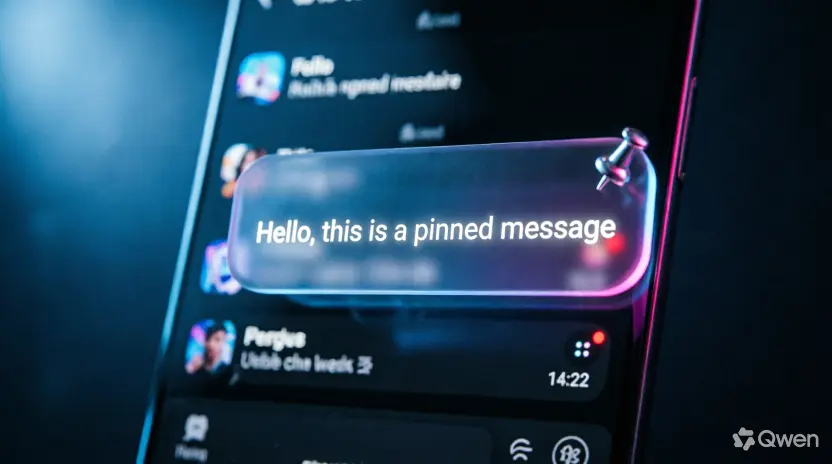
In a chat, pinning generally means giving a particular conversation or message special visibility.
Imagine that ten people are chatting in a group. Messages are constantly being added. Someone posts:
“Tomorrow’s meeting is at 10 AM. The address is here.”
A group member might reply:
“Can someone pin this?”
They are not talking about a physical pin. They are asking someone to keep that message easily accessible.
This is especially useful for information that people need to refer to more than once.
For example:
“Pin the Wi-Fi details.”
“Can you pin the event information?”
“I pinned the schedule.”
“Let’s pin the group rules.”
In all of these examples, pin refers to organizing or preserving useful information within the digital conversation.
What Does Pin Mean on Social Media?
On social media, pin can mean keeping a post, comment, image, or other content in a prominent position.
For example, a creator might pin an important comment beneath a post. This makes the selected comment easier for visitors to notice.
Someone might say:
“She pinned my comment!”
That usually means the account owner selected the person’s comment and placed it in a prominent position.
A social media user may also say:
“I pinned my favorite post.”
Here, the person is using a platform feature to keep that content visible or organized.
The exact function differs from one social network to another, so the meaning should always be understood from the platform and the surrounding conversation.
Pin vs. Save: Are They the Same?
Pin and save are related, but they are not always exactly the same.
When you save something, you generally keep it for future reference. When you pin something, you often give it a more prominent or fixed position.
Think of the difference this way:
Save: “I want to keep this.”
Pin: “I want to keep this somewhere easy to see or access.”
For example, you might save a recipe because you want to cook it next week. You might pin a message because you need everyone in a group to see it.
Some platforms use these words differently, though. One app’s “pin” feature may behave almost exactly like another app’s “save” feature.
That is why the specific platform matters.
What Does “Pin This” Mean in a Text?
If someone tells you “pin this,” they are usually asking you to keep the message or information somewhere easy to access.
For example:
“Here’s the address for Saturday. Pin this.”
The speaker probably wants you to make sure the address does not get buried under later messages.
Another example:
“This is the tracking number. Pin this message.”
Again, the meaning is simply to keep the information readily available.
Depending on the app, “pin this” could also mean placing the conversation or message at the top of your chat list.
What Does “Pinned” Mean in Texting?
Pinned is the past-tense or adjective form of “pin.”
If someone says:
“I pinned it.”
They mean they used a pinning feature to keep something accessible.
If they say:
“The message is pinned.”
They mean the message has already been placed in a prominent or designated location.
For example:
“The rules are pinned at the top.”
This tells group members where to find important information.
You might also hear:
“Check the pinned message.”
That means the information you need has already been placed in a prominent position within the chat.
What Does Pin Mean in a Group Chat?
In group chats, pin is especially common because conversations can become busy very quickly.
Suppose a family group is discussing a vacation. Someone posts the hotel address, booking details, and check-in time.
Another person may say:
“Let’s pin the hotel information.”
They want those details to remain easy for everyone to find.
A workplace group might use the same feature for:
- Meeting information
- Deadlines
- Project links
- Important announcements
- Shared documents
- Contact details
- Schedules
So if someone says “check the pin” or “look at the pinned message,” they are directing you to information that has been deliberately kept accessible.
What Does PIN Mean in Texting When It Is in Capital Letters?
There is an important difference between pin and PIN.
When written as PIN, it often means Personal Identification Number.
This is a security code used to verify someone’s identity or authorize access.
You may see it in messages such as:
“Enter your PIN.”
“I forgot my PIN.”
“Your PIN has been changed.”
“Do not share your PIN.”
In these examples, PIN does not mean saving or highlighting a message.
It refers to a confidential numerical code.
PINs can be associated with things such as bank cards, mobile devices, accounts, payment systems, or security features.
Because a PIN can protect sensitive information or money, you should never share a private PIN simply because someone asks for it in a text message.
How to Tell Which Meaning of Pin Someone Intended
The easiest way to understand the word is to look at the surrounding words.
If someone says:
“Pin this message.”
They almost certainly mean save or keep the message accessible.
If someone says:
“What’s your PIN?”
They are probably talking about a Personal Identification Number.
If someone says:
“Check the pinned comment.”
They mean a comment that has been deliberately placed in a prominent position.
If someone says:
“I pinned the chat.”
They probably mean they moved or marked the conversation so it is easier to access.
Context is more important than capitalization alone. People sometimes write “pin” instead of “PIN” even when they mean a security number, especially in casual texting.
Examples of “Pin” in Text Messages
Here are some natural examples showing how the word is used.
Example 1
“Pin the address so everyone can find it.”
Meaning: Keep the address easily accessible.
Example 2
“I pinned the announcement.”
Meaning: I placed the announcement somewhere prominent.
Example 3
“Can you pin this message?”
Meaning: Can you keep this message easily visible or accessible?
Example 4
“Check the pinned message for the schedule.”
Meaning: Look at the message that has been saved or highlighted.
Example 5
“She pinned my comment.”
Meaning: She placed the comment in a prominent position.
Example 6
“I forgot my PIN.”
Meaning: I forgot my Personal Identification Number.
Example 7
“Never send your PIN by text.”
Meaning: Do not share your private security number through messaging.
What Does “Pin It” Mean in a Conversation?
“Pin it” usually means save or keep it in a prominent place.
The phrase is short and casual, so it is common in online conversations.
For example:
“That link is useful. Pin it.”
The speaker wants the link kept somewhere easy to access.
Someone could also say:
“Pin it to the top.”
This makes the intended meaning even clearer: they want the item to remain at the top or in a prominent location.
The phrase does not necessarily have anything to do with the physical object called a pin.
What Does “Pin This Message” Mean?
“Pin this message” is a direct request to preserve or highlight a message.
Imagine a group chat where someone posts:
“The party starts at 7 PM. The address is 25 Green Street.”
Another member says:
“Pin this message.”
They are asking for that information to remain easy to find.
This can save people from scrolling through hundreds of messages later.
In many digital conversations, a pinned message functions almost like a small noticeboard.
What Does Pin Mean on Pinterest?
On Pinterest, pin has a more specific meaning.
A Pin is a piece of content saved to Pinterest. It may contain an image, video, product, recipe, idea, article, or other visual content.
When someone says:
“I pinned this recipe.”
They usually mean they saved that recipe as a Pin on their Pinterest account.
This use is related to the broader online idea of saving content, but Pinterest gives the word its own platform-specific meaning.
You might see phrases such as:
“Pin this for later.”
“I found a great Pin.”
“Save this as a Pin.”
The surrounding Pinterest context makes the meaning clear.
Is “Pin” Internet Slang?
Pin is not really slang in the traditional sense.
It is an ordinary English word that has developed several common digital uses.
Technology and social media have turned “pin” into a familiar online action. Instead of physically attaching something with a pin, users can digitally “pin” messages, posts, comments, chats, and other content.
So if someone uses “pin” in a text conversation, they are generally using normal digital vocabulary rather than secret slang.
That distinction is useful because you do not need to search for a complicated hidden meaning every time you see the word.
What Does Pin Mean When Someone Says “Pin This for Later”?
When someone says “pin this for later,” they normally mean:
Keep this information somewhere easy to find because you may need it later.
For example:
“This is the recipe I was talking about. Pin this for later.”
The speaker wants the recipe preserved for future use.
Similarly:
“Pin this address for later.”
means:
“Keep this address somewhere accessible so you can find it when you need it.”
The exact action depends on the app, but the basic idea is preservation and easy access.
Does Pin Mean Save?
Sometimes, yes.
In casual online language, people may use pin and save almost interchangeably when the goal is to keep something for future reference.
However, technically, a pinning feature usually does something more specific than ordinary saving.
For example, a saved item might be stored in a private collection, while a pinned item could be displayed at the top of a chat or page.
Therefore, the safest interpretation is:
Pin = keep something in a prominent or easily accessible place.
Save = keep something for later use or reference.
The two actions can overlap, but they are not always identical.
Pin Meaning in Different Online Situations
The word can be understood quickly by looking at the situation.
| Situation | Likely Meaning |
|---|---|
| “Pin this message” | Keep the message easily accessible |
| “Check the pinned post” | Look at the highlighted or fixed post |
| “Pin my comment” | Place the comment prominently |
| “Pin the chat” | Keep the conversation easy to access |
| “Pin this recipe” | Save it as a Pinterest Pin or similar saved item |
| “What is your PIN?” | Personal Identification Number |
| “Enter your PIN” | Security number or access code |
| “I forgot my PIN” | Forgot a Personal Identification Number |
This is why there is no single meaning that works in every conversation.
What Does Pin Mean in a Text From a Friend?
If a friend casually says “pin this,” they probably want you to save or highlight something.
For example:
“Here’s the concert address. Pin this.”
Your friend likely wants you to keep the address somewhere you can find it quickly.
If they instead say:
“I need your PIN.”
you should pay attention to the context. If they mean a banking or device PIN, that is private security information and should not normally be shared.
If the meaning is unclear, you can simply ask:
“Do you mean pin the message or your PIN number?”
A short clarification can prevent a misunderstanding.
Why Do People Pin Messages?
People pin messages mainly because important information can disappear quickly in busy conversations.
Consider a group chat with hundreds of messages. A useful piece of information posted in the morning might be difficult to find by the afternoon.
Pinning solves that problem.
People commonly pin:
- Addresses
- Event details
- Important announcements
- Rules
- Meeting times
- Links
- Contact information
- Instructions
- Schedules
It is basically a digital way of saying, “This is important, so keep it where we can find it.”
What Does Pin Mean on Messaging Apps?
Different messaging apps use pinning in slightly different ways.
Some let users pin individual messages. Others allow them to pin entire conversations. Some offer both.
The feature might appear as:
- Pin
- Pinned
- Pin to top
- Pinned message
- Pin conversation
Although the wording varies, the basic idea is similar: make something easier to access later.
If you see a small pin icon beside a conversation or message, it usually indicates that the item has been intentionally kept prominent.
Is Pin a Positive or Negative Word?
“Pin” is generally neutral.
It does not automatically communicate happiness, anger, sarcasm, affection, or annoyance.
The emotional meaning comes from the surrounding message.
For example:
“Please pin the meeting details.”
is simply practical.
“Finally! You pinned my comment 😂”
could be excited or playful.
“Why did you pin that old message?”
could sound confused or annoyed.
The word itself does not determine the tone.
What Should You Reply When Someone Says “Pin This”?
Your response depends on whether you can actually pin the item and what the person is asking.
Simple replies include:
“Sure, I’ll pin it.”
“Done.”
“Got it, I’ll keep it pinned.”
If you are unsure what they mean, ask:
“Do you mean pin the message?”
If the app does not support pinning, you could say:
“I can’t pin it here, but I’ll save it.”
The important thing is to understand whether they mean a digital pin or a security PIN.
Common Misunderstandings About the Word Pin
One common mistake is assuming that “pin” always means a security code.
That is not true.
If someone says:
“Pin this post.”
they are not asking for a number.
Another mistake is assuming that “pin” always means saving something privately. On some platforms, pinning makes content more visible to other users.
A third mistake is assuming that every platform uses the feature in exactly the same way.
Digital vocabulary changes from app to app, so it is always useful to consider the platform and the full sentence.
Quick Answer:
If you need the shortest possible explanation:
“Pin” in text usually means to save, highlight, or keep a message, chat, post, or other content in an easy-to-find place.
For example:
“Pin this message.”
means:
“Keep this message easily accessible.”
But PIN can also mean Personal Identification Number when the conversation is about security, banking, phones, payments, or account access.
So the correct meaning depends on context.
FAQs:
What does “pin” mean in text?
In texting, “pin” usually means to save, highlight, or keep a message or conversation in an easy-to-find place. For example, “Pin this message” means to keep that message accessible.
What does “pin this” mean in a text?
“Pin this” usually means save or keep the information somewhere prominent so it can be found easily later. The exact feature depends on the messaging app.
What does “pinned message” mean?
A pinned message is a message that has been deliberately kept in a prominent or easily accessible location within a chat or group conversation.
Does “pin” mean save?
It can. Both words involve keeping something for later, but pinning often means placing something in a prominent or easy-to-access location, while saving may simply store it for future reference.
What does PIN mean in texting?
When written as PIN, it commonly means Personal Identification Number. It is usually a private security code used for a phone, bank card, account, payment, or another protected service.
Is a PIN the same as a password?
Not always. A PIN is generally a numerical code, while a password can contain letters, numbers, symbols, or other characters. Both can be used to protect access.
What does “pin the chat” mean?
“Pin the chat” usually means keep that conversation at the top or in a prominent position so it is easier to access.
What does “pin this message for later” mean?
It means keep the message somewhere easy to find because the information may be needed later. This could include an address, schedule, link, or important reminder.
What does “pinned comment” mean?
A pinned comment is a comment that has been selected and placed in a prominent position, usually so other people can see it more easily.
Is “pin” internet slang?
Not exactly. Pin is a regular English word with several digital uses. Online platforms use it to describe actions such as highlighting, saving, or keeping content easily accessible.
How can I tell which meaning of “pin” someone means?
Look at the context. “Pin this message” usually refers to saving or highlighting content, while “enter your PIN” usually refers to a Personal Identification Number.
Should I share my PIN if someone asks for it in a text?
Generally, no. A personal banking, payment, phone, or account PIN is sensitive security information and should not be shared through an ordinary text message.
Final Thoughts
The word pin has become a normal part of digital communication. While it originally refers to a small physical object online platforms use the word to describe the action of keeping something prominent organized or easy to access.
In a chat, pin usually means to keep a message or conversation somewhere convenient. On social media it can mean highlighting a post or comment. On Pinterest a Pin is a specific piece of saved content. In security-related conversations PIN usually means Personal Identification Number.
The easiest way to understand the word is to look at the surrounding sentence.
If you see pin this pinned message or pin the chat think save or keep accessible.
If you see enter your PIN, forgot my PIN,” or PIN number, think security code.
In other words, there is no complicated secret slang meaning behind the word. Context tells you what pin means.

Alina is a passionate English language writer, educator, and content creator with over 5 years of experience in English learning, vocabulary, word meanings, grammar, writing, and everyday language.
As the author at LearnzText, Alina creates clear, helpful, and easy-to-understand content for readers who want to improve their English and better understand words, phrases, expressions, and language usage. Her goal is to make learning English simple, practical, and enjoyable for everyone.
 Zeya Mark
 Nira Mark