If you have ever received a text containing a single and wondered what the sender actually meant, you are not alone. The exclamation mark is one of the most common punctuation marks in texting but its meaning can change depending on the words around it the relationship between the people chatting and even how many exclamation marks are used.
In simple terms an exclamation mark usually adds emotion emphasis excitement urgency surprise or energy to a message. It can make an ordinary sentence sound warmer and more enthusiastic. In some situations though it can make a message feel angry dramatic or unusually intense.
For example compare these messages:
- Thanks.
- Thanks!
- THANKS!!!
The basic message is the same, but the emotional tone is different. The first may sound neutral or serious. The second often feels friendly and appreciative. The third sounds much more excited or enthusiastic.
That is why punctuation matters so much in digital communication. Since texting does not include facial expressions, voice tone, or body language small symbols such as ! ? and … can help communicate emotion.
What Does the Exclamation Mark Mean in Texting?
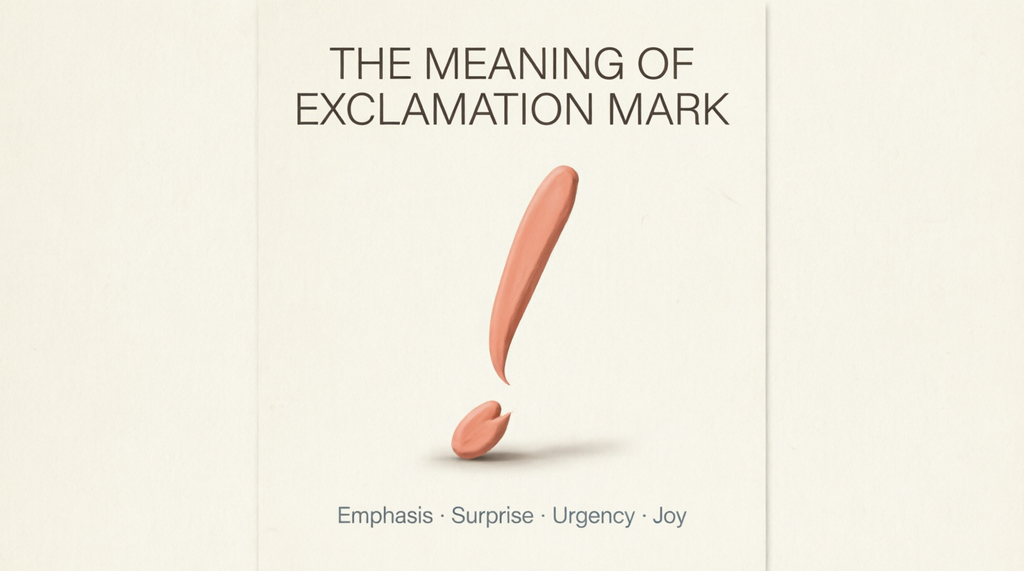
An exclamation mark (!) generally shows that the writer wants to add extra feeling or emphasis to a statement.
Depending on the context, it can communicate:
- Excitement
- Happiness
- Surprise
- Enthusiasm
- Strong emphasis
- Urgency
- Encouragement
- Shock
- Anger
- Playfulness
There is no single meaning that applies to every conversation.
For example, someone texting “That’s amazing!” is probably expressing enthusiasm. Someone writing “Stop!” is using the same punctuation to communicate urgency.
The words themselves provide the main meaning. The exclamation mark simply increases the emotional intensity.
What Does “!” Mean in a Text Message?
When someone sends just “!”, its meaning depends heavily on the conversation that came before it.
A single exclamation mark can sometimes be used as a quick emotional reaction. The sender may be surprised, excited, confused, or emphasizing something.
For instance:
Person A: “I got the tickets!”
Person B: “!”
In that situation, the symbol could mean something like “Wow!”, “Really?”, or “That’s exciting!”
However, if someone sends:
“Come here!”
the meaning is completely different. The exclamation mark adds urgency and emphasis.
So when you see a standalone !, do not automatically assume that it has one fixed definition. Look at the surrounding messages and the person’s normal texting style.
Why Do People Use Exclamation Marks in Texts?
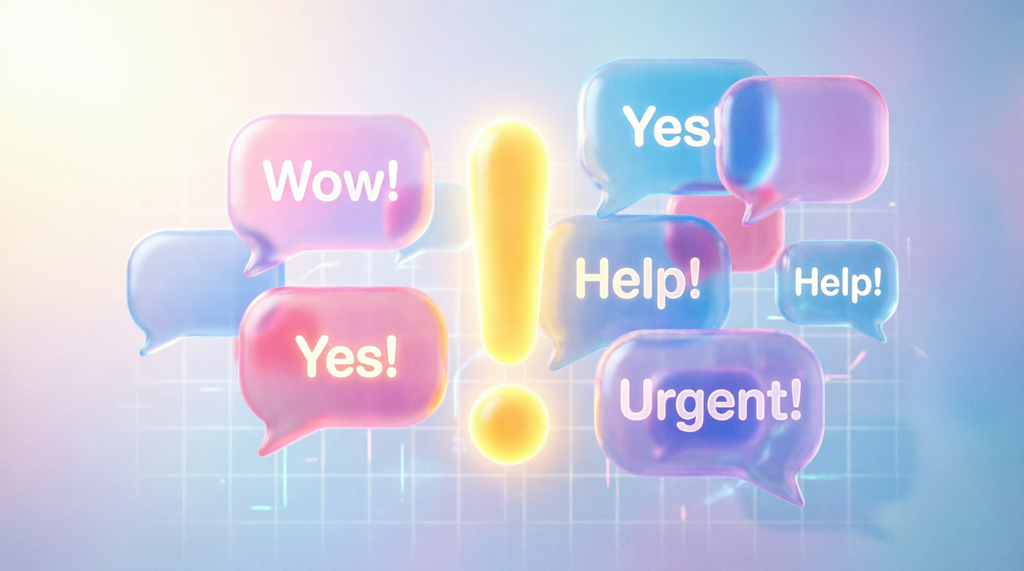
People use exclamation marks because written messages can otherwise sound flat.
Imagine receiving:
“I’m so happy for you.”
Now compare it with:
“I’m so happy for you!”
The second version usually feels more energetic and emotionally expressive.
In face-to-face conversation, people communicate emotion through their voice. They might speak louder, smile, laugh, or use an excited tone. Texting removes most of those signals.
Punctuation helps fill that gap.
An exclamation mark can therefore act almost like a small tone indicator. It tells the reader that the sentence should be read with more emotion than a plain statement.
Does “!” Mean Excitement?
Often, yes.
One of the most common uses of an exclamation mark is to show excitement or enthusiasm.
Examples include:
- “We’re going on vacation!”
- “I finally passed the exam!”
- “You got the job!”
- “That movie was incredible!”
- “I can’t wait to see you!”
In these examples, the punctuation reinforces positive emotion.
If someone normally writes very short, neutral messages but suddenly starts using several exclamation marks, they may be especially excited about what they are saying.
Still, punctuation habits vary from person to person. Some people naturally use ! frequently, while others rarely use it.
Does an Exclamation Mark Mean Anger?
It can, but not necessarily.
An exclamation mark is sometimes used when someone is angry, frustrated, or giving a strong command.
For example:
“Leave me alone!”
“Don’t touch that!”
“I told you already!”
Here, the exclamation mark makes the sentence feel stronger.
But punctuation alone does not prove that someone is angry. You need to consider the actual words, the conversation, and the relationship between the people involved.
Compare:
“Be careful!”
with:
“Why did you do that?!”
The first could simply be a caring warning. The second may suggest frustration, surprise, or anger.
Does “!” Mean Someone Is Yelling?
Not always.
An exclamation mark can make a message feel louder or stronger, but it does not automatically mean the person is yelling.
For example:
“Happy birthday!”
does not mean the person is shouting. It simply adds enthusiasm.
On the other hand:
“STOP!”
can visually resemble shouting because the capital letters and punctuation both increase the intensity.
This is why the complete message matters more than the punctuation mark by itself.
What Does “!!” Mean in Texting?
Two exclamation marks usually add more emphasis than one.
For example:
“Really!!”
could show strong surprise or excitement.
“Thank you!!”
often feels especially warm and enthusiastic.
“Watch out!!”
can communicate urgency.
Some people regularly use double exclamation marks as part of their normal texting style. For them, !! may not represent a particularly intense emotion.
In casual online conversations, punctuation is often flexible rather than strictly grammatical.
What Does “!!!” Mean in a Text?
Three or more exclamation marks usually indicate strong emotion or extra emphasis.
For example:
“I won!!!”
“That’s incredible!!!”
“You’re here!!!”
The extra marks can make the message feel energetic, excited, dramatic, or playful.
However, multiple exclamation marks can also communicate anger:
“What are you doing!!!”
Again, context is essential.
A useful rule is that more exclamation marks generally mean more emotional intensity, but the direction of that emotion depends on the words.
Is an Exclamation Mark Flirty in Texting?
Sometimes it can contribute to a playful or enthusiastic tone, but ! does not automatically mean flirting.
For example:
“You look great!”
could be friendly, romantic, complimentary, or simply enthusiastic.
Likewise:
“See you tonight!”
could be completely ordinary.
If the conversation contains other clearly affectionate or romantic language, an exclamation mark may make the message feel more energetic or playful. But the punctuation itself is not reliable evidence of romantic interest.
Does “!” Mean Someone Is Being Friendly?
Very often, an exclamation mark can make a message feel warmer.
Consider:
“Nice to meet you.”
versus:
“Nice to meet you!”
The second generally feels more welcoming and enthusiastic.
This is particularly noticeable when people are communicating with someone they do not know well. A plain sentence can sometimes be interpreted as formal or distant, while an exclamation mark can soften it.
For example:
“Let me know if you need anything.”
is perfectly polite.
“Let me know if you need anything!”
may feel slightly more supportive and upbeat.
That difference is subtle, but it matters in digital communication.
What Does “!” Mean on Social Media?
On social media, exclamation marks are commonly used to express excitement, emphasis, humor, celebration, or enthusiasm.
You might see them in:
- Comments
- Direct messages
- Posts
- Stories
- Group chats
- Replies
- Online communities
Examples include:
“This is so good!”
“Congratulations!”
“I love this!”
“No way!!!”
Social media communication is generally informal, so people often use punctuation creatively. Multiple exclamation marks, emojis, capital letters, and repeated words may appear together.
For example:
“YOU DID IT!!! 🎉”
The combination communicates much more emotion than the words alone.
What Does an Exclamation Mark Mean From a Friend?
When a friend uses !, it usually depends on their personality and normal texting habits.
If your friend frequently writes:
“Okay!”
“Sure!”
“See you soon!”
the punctuation may simply be part of their everyday style.
If they normally use periods but suddenly send:
“We need to talk!”
that change may be more meaningful.
Looking for a person’s usual communication pattern is often more useful than trying to assign a universal meaning to one punctuation mark.
What Does “!” Mean From a Crush?
A single exclamation mark from someone you like can be easy to overthink.
For example:
“Good morning!”
may feel enthusiastic, but it does not automatically indicate romantic interest.
Similarly:
“I’d love to see you!”
sounds positive, but the context determines whether the message is friendly or romantic.
Instead of interpreting the punctuation alone, consider the full conversation. Look at the actual words, the person’s behavior, and whether they consistently communicate warmly with you.
A punctuation mark is a weak signal on its own.
Exclamation Mark vs. Period in Texting
The difference between a period and an exclamation mark can noticeably change the tone.
| Message | Possible Tone |
|---|---|
| “Okay.” | Neutral, serious, or reserved |
| “Okay!” | Friendly or enthusiastic |
| “Okay!!” | Very enthusiastic or excited |
| “Okay!!!” | Highly excited, dramatic, or urgent |
These are not strict rules. Someone who uses periods frequently may not intend to sound cold or upset.
Texting style varies greatly from person to person.
Exclamation Mark vs. Question Mark
The two punctuation marks communicate different things.
A question mark (?) normally signals a question, uncertainty, or curiosity.
An exclamation mark (!) generally signals emotion, emphasis, or intensity.
For example:
“You won?”
sounds like a question.
“You won!”
sounds like a statement expressing excitement or surprise.
You may also see them together:
“You won?!”
This often communicates strong surprise or disbelief.
The combination is common in informal digital communication.
What Does “?!” Mean in Texting?
The combination ?! is commonly used when someone is both questioning something and reacting emotionally.
Examples:
“You did what?!”
“They canceled it?!”
“You met her?!”
The sender is usually not asking a calm, ordinary question. They are showing surprise, disbelief, shock, or strong curiosity.
It can also be used humorously.
For example:
“You ate the whole pizza?!”
The exact emotion depends on the situation.
What Does “!?” Mean in Texting?
The order !? is also used informally to express a mixture of surprise and questioning.
For many people, ?! and !? have nearly the same practical meaning.
For example:
“What happened?!”
and
“What happened!?”
both communicate a strong emotional reaction.
There is no universally enforced texting rule that makes one dramatically different from the other.
Can “!” Make a Text Sound Rude?
Yes, in certain contexts.
An exclamation mark can make a command sound forceful:
“Send it now!”
“Stop!”
“Listen to me!”
Without context, this can feel aggressive.
But the same punctuation can also make a friendly sentence warmer:
“Have a great day!”
So the exclamation mark itself is not inherently rude. Its effect depends on the words surrounding it.
Why Does “Sure!” Sometimes Feel Different From “Sure”?
This is one of the most interesting parts of texting.
“Sure.” can sound neutral, serious, or even reluctant depending on the conversation.
“Sure!” often feels more willing and upbeat.
For example:
“Can you help me tomorrow?”
“Sure!”
usually sounds positive.
But if someone responds:
“Fine!”
the exclamation mark may make the response sound irritated or defensive.
This shows why punctuation should be interpreted alongside the actual word being used.
What Does an Exclamation Mark Mean From a Boss or Coworker?
In professional communication, an exclamation mark can have several meanings.
A coworker might write:
“Great job!”
to show appreciation.
A manager might write:
“Thanks for handling that!”
to sound warm and positive.
But in some workplace situations, too many exclamation marks may make communication seem overly casual.
The appropriate style depends on the workplace, relationship, and subject of the message.
For formal communication, one exclamation mark can be enough when genuine enthusiasm is intended.
What Does an Exclamation Mark Mean in Gmail or Email?
The meaning is generally similar in email: it adds emphasis or emotion.
For example:
“Thank you for your help!”
sounds warmer than:
“Thank you for your help.”
However, professional emails usually benefit from moderation.
An exclamation mark can be useful for congratulations, appreciation, celebrations, or friendly communication. Using several of them repeatedly may make an email feel overly emotional or informal.
Why Younger People May Use “!” Differently
Texting habits change over time, and different age groups can develop different interpretations of punctuation.
Some people use exclamation marks frequently to show friendliness. Others may interpret certain punctuation choices more seriously.
For example, one person may see:
“Okay!”
as cheerful.
Another person may see:
“Okay!”
as slightly intense.
Neither interpretation is automatically correct. Digital language is shaped by personal habits, communities, platforms, and relationships.
This is one reason slang and texting conventions can be difficult for beginners to understand.
How Context Changes the Meaning of “!”
Context is the most important factor.
Consider the sentence:
“You’re coming!”
It could mean:
- Excited: “Great, you’re coming!”
- Surprised: “Wait, you’re actually coming!”
- Confirming: “You’re coming!”
- Demanding attention: “You’re coming!”
The punctuation adds energy, but the surrounding conversation tells you what kind of energy it is.
Before interpreting a message, consider:
- What did the person say before it?
- What relationship do you have with them?
- Do they normally use exclamation marks?
- Are they discussing something exciting or stressful?
- Are there emojis or capital letters?
- Is the message a statement, question, command, or joke?
These clues provide a much more accurate interpretation.
Common Examples of “!” in Texting
Here are some everyday examples:
“I’m so excited!” — enthusiasm
“Congratulations!” — celebration
“Watch out!” — warning
“Stop!” — urgency or command
“Really!” — surprise or emphasis
“That’s awesome!” — positive reaction
“Thank you!” — appreciation
“No way!” — surprise or disbelief
“Good luck!” — encouragement
“See you soon!” — friendly enthusiasm
Notice that the same punctuation mark appears in every example, but the emotion changes according to the words.
When Should You Avoid Overthinking “!”?
It is easy to spend too much time analyzing punctuation in a text message.
If someone sends:
“Thanks!”
there is usually no reason to assume something complicated is hidden behind the exclamation mark.
Likewise, if someone writes:
“Okay!”
it may simply be their normal way of texting.
People have different punctuation habits. Some use ! constantly. Others almost never use it. Some people add several marks whenever they are excited.
A single punctuation mark rarely provides enough information to understand someone’s complete emotional state.
Is “!” a Slang Word?
No. The exclamation mark is a punctuation symbol, not a slang word.
However, its use in texting has developed informal conventions. People may use it to represent emotional reactions that would normally be communicated through speech, facial expressions, or gestures.
That makes ! an important part of online communication even though it is not internet slang in the traditional sense.
What Does a Red Exclamation Mark Mean?
A red exclamation mark can mean something different from an ordinary typed !.
On some messaging platforms, an exclamation icon may appear when a message fails to send or when an app wants to alert you about something.
For example, a red exclamation symbol beside a message may indicate a sending or delivery problem.
That is different from intentionally typing an exclamation mark in a sentence.
If you see a colored exclamation icon next to a message rather than inside the message itself, check the specific app’s interface and notification information.
What Does “!” Mean in Different Apps?
The basic emotional use of an exclamation mark is similar across platforms such as texting apps, social media, email, and group chats.
However, individual apps may also use exclamation icons as interface notifications.
That means you should distinguish between:
Typed punctuation:
“Wow!”
and
An app-generated symbol:
❗ appearing beside a message.
The first is part of someone’s written communication. The second may be an application status or alert.
Is One Exclamation Mark Too Much?
No.
One exclamation mark is completely normal in casual texting.
Whether it feels appropriate depends on the situation.
conversations, one mark can add warmth without making the message overly dramatic.
For formal writing, a period may sometimes be more appropriate.
For enthusiastic social media posts, multiple marks may be common.
There is no universal rule saying that one particular amount is always correct.
Is “!” Different From “!!!”?
Yes, mainly in intensity.
A useful way to think about it is:
! = emphasis or emotion
!! = stronger emphasis
!!! = very strong emotion, excitement, urgency, or drama
For example:
This is an informal communication pattern, not a strict grammatical rule.
How to Respond When Someone Uses “!”
Usually, you do not need to respond differently simply because someone used an exclamation mark.
If they say:
“That’s amazing!”
you can respond naturally:
“I know! I’m so happy.”
If they say:
“Watch out!”
respond to the actual warning rather than focusing on the punctuation.
If you are unsure whether they are angry, look at the broader context or simply ask what they mean.
Clear communication is better than trying to decode every punctuation mark.
Quick Guide to Exclamation Mark Meanings
| Text Style | Common Interpretation |
|---|---|
| “Hi!” | Friendly greeting |
| “Thanks!” | Appreciation |
| “Really!” | Surprise or emphasis |
| “Wow!” | Amazement |
| “Stop!” | Urgency or command |
| “Great!” | Approval or enthusiasm |
| “Okay!” | Positive agreement |
| “No way!” | Surprise or disbelief |
| “!!” | Stronger emotion |
| “!!!” | Very strong emotion or excitement |
| “?!” | Surprise plus questioning |
| “!” alone | Emotional reaction; meaning depends heavily on context |
These interpretations are common, but they are not fixed definitions.
FAQs:
What does an exclamation mark (!) mean in text?
An exclamation mark usually adds emotion, emphasis, excitement, or urgency to a text. Its exact meaning depends on the words and context.
What does “!” mean when someone texts it alone?
A single ! can express surprise, excitement, emphasis, or a strong reaction. The meaning depends on the conversation and the sender’s usual texting style.
Does “!” mean excitement in texting?
Often, yes. People commonly use ! to show excitement, happiness, enthusiasm, or positive energy, such as “That’s amazing!”
Does an exclamation mark mean someone is angry?
Not necessarily. It can show anger or urgency in messages such as “Stop!”, but it is also commonly used in friendly and positive messages.
What does “!!” mean in texting?
“!!” usually adds more emphasis or emotional intensity than one exclamation mark. It can express excitement, surprise, urgency, or enthusiasm.
What does “!!!” mean in a text?
“!!!” usually indicates very strong emotion. Depending on the context, it can show extreme excitement, surprise, urgency, frustration, or drama.
What does “?!” mean in texting?
“?!” usually expresses surprise, disbelief, shock, or confusion while also asking a question. For example, “You did what?!”
Is an exclamation mark flirty in texting?
An exclamation mark can make a message sound more enthusiastic or playful, but it does not automatically mean someone is flirting. The rest of the conversation provides more useful context.
Does “!” make a text sound friendly?
It can. For example, “Thanks!” often sounds warmer and more enthusiastic than “Thanks.” However, individual texting habits vary.
What does “!” mean on social media?
On social media, an exclamation mark is commonly used to express excitement, emphasis, surprise, celebration, or enthusiasm in posts, comments, and messages.
Is “!” different from “!!!”?
Yes, usually in emotional intensity. One ! adds emphasis, while !!! generally makes the emotion feel much stronger. These are informal texting conventions rather than strict rules.
Can an exclamation mark make a message sound rude?
Yes, depending on the words and context. For example, “Stop!” can sound forceful, while “Have a great day!” usually sounds friendly.
What does “Okay!” mean in texting?
“Okay!” often sounds positive, willing, or friendly. Its meaning can change depending on the conversation and the person’s normal texting style.
What does a red exclamation mark mean next to a text?
A red exclamation icon next to a message may indicate a sending or delivery problem in some messaging apps. This is different from intentionally typing an exclamation mark in a message.
Final Answer:
The exclamation mark (!) usually adds emotion, emphasis, or energy to a text message. It can show excitement, happiness surprise enthusiasm, urgency, encouragement, or even anger.
When someone sends a single !, the meaning is more dependent on context. It might express surprise excitement acknowledgment, or a strong reaction.
The most important thing to remember is that punctuation does not have a universal emotional meaning. A person’s texting habits, the words they use the conversation topic and your relationship with them all matter.
In general:.
If you are trying to understand a particular message, read the entire conversation rather than focusing on the punctuation alone. In digital communication, context is usually the best clue to what someone really means.

Nira is an experienced English language writer and content creator with over 5 years of experience in writing clear, engaging, and easy-to-understand content about words, phrases, abbreviations, slang, expressions, and modern internet language.
As a dedicated author at LearnzText, Nira focuses on helping readers understand confusing words, texting abbreviations, social media slang, everyday expressions, and language meanings in a simple and practical way. Her goal is to make every explanation easy to understand, whether the reader is a student, English learner, parent, teacher, or simply someone curious about a new word or phrase.
 Alina Mark
 Zeya Mark