

Have you ever sent someone a message waited for a reply and noticed that they suddenly stopped responding? Maybe your messages are being delivered, but the person no longer answers. Or perhaps someone you were talking to regularly has disappeared without explaining why. In texting and online conversations this situation is often described as being ghosted.
The term has become common in dating friendships social media and everyday digital communication. People use it when someone suddenly stops communicating without giving a clear explanation.
But does being ghosted always mean someone has lost interest? Can it happen between friends and what should you do when it happens to you?
In this guide you will learn what ghosted means in text how people use the term what it looks like in real conversations, and how to respond when someone disappears from your messages.
What Does Ghosted Mean in Text?
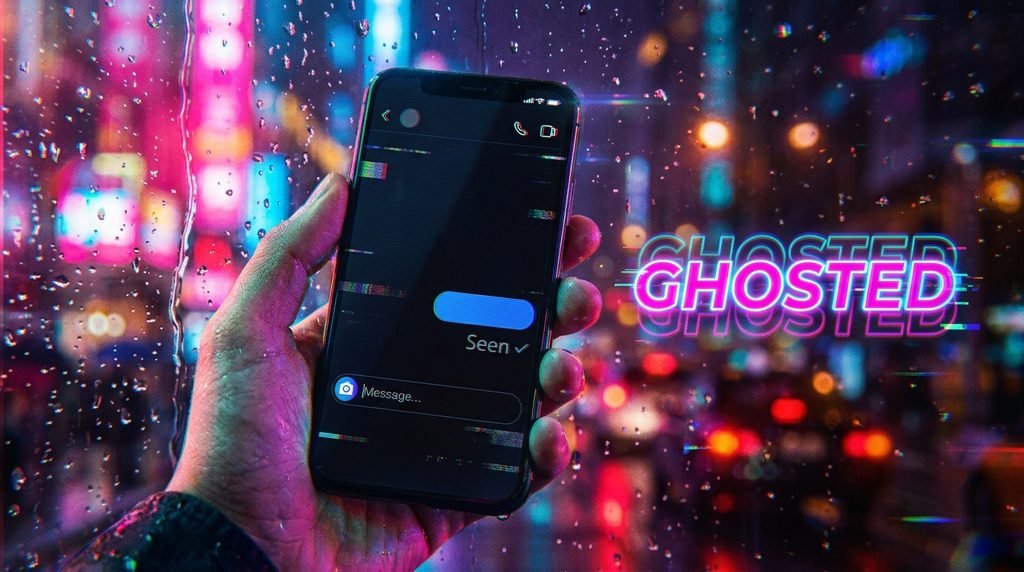
In texting, ghosted means that someone suddenly stops replying to your messages or communicating with you without explaining why.
Instead of telling you they want to end a conversation, relationship, or friendship, they simply disappear from your communication.
For example, imagine you have been texting someone every day for two weeks. You share jokes, ask about each other’s day, and talk about your plans. Then, without warning, they stop responding. Your messages remain unanswered, and you receive no explanation.
You might say:
- “I think I got ghosted.”
- “He ghosted me after our date.”
- “She suddenly stopped replying. I guess I’ve been ghosted.”
In each example, the word describes a sudden disappearance from communication.
The expression comes from the word ghost, which refers to a spirit that is not physically present. In modern slang, someone who ghosts another person seems to disappear from their life just as unexpectedly.
Ghosting is usually associated with ignoring messages or ending contact, particularly when the other person reasonably expects a reply. It can happen through text messages, dating apps, social media platforms, or even phone calls.
However, a delayed reply does not automatically mean ghosting. Someone might be busy, dealing with a personal problem, taking a break from their phone, or simply forgetting to respond.
The key idea is that communication stops unexpectedly and the person does not explain their disappearance.
What Does Ghosted Mean in a Text Message?
When someone uses the word “ghosted” in a text message, they are usually talking about a person who has stopped communicating with them.
The exact meaning depends on the conversation.
For example:
Person A: “How did your date go?”
Person B: “It was great, but he ghosted me afterward.”
Here, Person B means the other person stopped responding after the date.
Another example:
Friend 1: “Have you heard from Maya lately?”
Friend 2: “No, she ghosted our group chat.”
In this situation, Maya has stopped participating in the group conversation.
People also use the term when discussing online friendships, job opportunities, or casual conversations. For instance, someone might say a recruiter ghosted them after an interview because the recruiter stopped communicating without providing an update.
Although the situations differ, the central meaning remains the same: someone unexpectedly stops responding or maintaining contact.
What Does Ghosting Mean on Social Media?

On social media, ghosting means suddenly stopping communication with someone through a platform or online account.
It might happen on Instagram, Snapchat, Facebook, TikTok, WhatsApp, or another messaging service.
Someone who ghosts you might stop replying to your direct messages, ignore your attempts to continue a conversation, or disappear from a chat they previously participated in.
Here are some examples of how people describe it:
- “He ghosted me on Instagram.”
- “She ghosted me on Snapchat after we started talking.”
- “My online friend ghosted our Discord chat.”
- “We used to message every day, but now I’ve been ghosted.”
Ghosting does not necessarily involve blocking or unfollowing someone. A person can still follow your account, view your posts, or appear online while no longer responding to your messages.
That said, social media activity alone cannot tell you why someone is not replying. Viewing a story or appearing active does not prove that someone is deliberately ignoring you.
The term describes the communication pattern, not a confirmed explanation for the person’s behavior.
What Does Ghosted Mean in Dating?
Dating is one of the most common situations in which people use the word ghosted.
In dating, ghosting happens when someone suddenly ends communication without telling the other person that they no longer want to continue dating or talking.
For example, two people might match on a dating app and exchange messages for several days. They may even meet in person and enjoy the date. Then one person stops responding completely.
The other person is left wondering what happened.
Ghosting can happen at different stages of dating:
- After matching: Someone stops replying after an initial conversation on a dating app.
- After texting for days: A person disappears after regular conversations.
- After a first date: Someone stops communicating instead of saying they do not feel a connection.
- During a relationship: A person abruptly cuts off contact without explanation.
- After discussing future plans: Someone disappears even though both people had talked about meeting again.
Ghosting can feel confusing because there is no clear ending. The person who has been ghosted may wonder whether they said something wrong, whether the other person lost interest, or whether something unexpected happened.
However, ghosting does not always reveal the reason behind the disappearance. The other person may have lost interest, felt uncomfortable communicating directly, or experienced circumstances that you do not know about.
Without an explanation, it is difficult to determine what actually happened.
What Does It Mean When a Guy Ghosts You?
When someone asks what it means when a guy ghosts them, they usually want to understand why he stopped replying.
In many cases, it means he has stopped participating in the conversation or relationship without communicating his intentions.
Possible explanations include:
- He may have lost interest in continuing the relationship.
- He may be unsure about what he wants.
- He may find difficult conversations uncomfortable.
- He may be dealing with personal circumstances.
- He may have decided to focus on other priorities.
- He may not be interested in maintaining the same level of communication.
These are possibilities, not facts. You cannot reliably determine a person’s feelings or intentions from unanswered messages alone.
For example, if a guy texts you every morning and suddenly disappears for several days, it is understandable to wonder whether something changed. But the silence itself does not establish exactly why he stopped responding.
Rather than trying to interpret every online activity or message status, consider the broader pattern. Has he repeatedly disappeared without explanation? Has he stopped making plans? Have you already reached out and received no response?
If you have made a reasonable effort to communicate and he continues to remain silent, it may be best to stop chasing an answer and focus on your own well-being.
You deserve communication that feels respectful and consistent.
What Does It Mean When a Girl Ghosts You?
When a girl ghosts someone, it means she has suddenly stopped communicating without explaining why.
This might happen after a friendship begins, following a date, or during an ongoing texting conversation.
There is no single explanation that applies to every situation. She may have lost interest, felt uncomfortable, become overwhelmed, or decided that she does not want to continue the interaction.
Sometimes, people avoid direct conversations because they are afraid of hurting someone’s feelings. Others may withdraw because they feel unsafe or believe that ending contact is the best option for them.
It is important not to assume that every instance of silence is intentional or that it reveals something about all women or men.
For example, if a girl stops replying after a few friendly conversations, it may indicate that she does not want to continue talking. But it could also reflect circumstances you are unaware of.
If she has clearly communicated that she does not want further contact, respect that boundary. If there has been no explanation, one polite follow-up may be reasonable, but repeated messages are unlikely to create the clarity you want.
The healthiest approach is to respect the other person’s space while deciding what level of communication you are willing to accept.
Examples of Ghosted in Text Conversations
Seeing the word used in realistic conversations makes its meaning easier to understand.
Here are several examples of how people use “ghosted” in everyday texting.
Example 1: After a Date
Alex: “How was your dinner date?”
Sam: “It went really well, but she hasn’t replied since.”
Alex: “Do you think she ghosted you?”
Sam: “Maybe. I haven’t heard anything from her in four days.”
In this conversation, Alex uses “ghosted” to describe the possibility that someone has stopped communicating after a date.
Example 2: A Friendship
Mia: “Have you talked to Jordan recently?”
Ella: “No, we used to text every weekend, but he ghosted me last month.”
Here, the term describes a friendship in which regular communication suddenly stopped.
Example 3: An Online Conversation
Chris: “Did that person from the gaming group ever reply?”
Taylor: “Nope, I think I got ghosted.”
The speaker believes the other person has disappeared from their online conversation.
Example 4: A Dating App
Lena: “Are you still talking to the guy you met on the app?”
Nora: “Not anymore. We chatted for a week, and then he ghosted me.”
This example shows how the term is used when someone stops responding during the early stages of dating.
Example 5: A Group Chat
Ryan: “Why isn’t Emma in the group chat anymore?”
Noah: “She hasn’t said anything in weeks. Maybe she ghosted the group.”
In this case, the word refers to someone who has stopped participating in a group conversation.
Example 6: A Job Opportunity
Ava: “Did the company contact you after your interview?”
Liam: “No. They said they’d follow up, but they ghosted me.”
Here, ghosting is used more broadly to describe an organization that stops communicating with a candidate after previously suggesting that it would respond.
Example 7: A Casual Text
Person A: “You disappeared on me!”
Person B: “Sorry, I’ve had a lot going on lately.”
This conversation illustrates why silence should not always be interpreted as deliberate ghosting. Sometimes, a person returns and explains the gap in communication.
What Is the Difference Between Ghosting and Ignoring?
Ghosting and ignoring are related, but they are not exactly the same.
Ignoring generally means not responding to someone or paying attention to their messages. It can happen once, occasionally, or repeatedly.
Ghosting usually describes a more complete or sustained disappearance from communication without an explanation.
For example, if your friend does not reply to one message because they are busy, that is not necessarily ghosting. If they suddenly stop communicating with you altogether after months of regular conversations, you might describe it as ghosting.
Here is a simple comparison:
| Situation | Likely meaning |
|---|---|
| Someone misses one message | A delayed or missed reply |
| Someone reads a message but does not answer | Ignoring or not responding |
| Someone stops replying for a short time but later explains why | A communication gap |
| Someone suddenly ends regular contact without explanation | Ghosting |
| Someone says they do not want to continue talking | Directly ending communication |
| Someone blocks you after you repeatedly contact them | Ending contact or enforcing a boundary |
These distinctions are not absolute. People use slang differently, and the same situation may be described in more than one way.
The important difference is that ghosting generally suggests a sudden and unexplained end to communication rather than a single unanswered message.
What Is the Difference Between Ghosting and Being Left on Read?
Being left on read means someone has opened or read your message but has not replied.
Ghosting describes a broader pattern in which someone stops communicating without explanation.
For example, suppose you send a friend a message asking whether they want to get coffee. They read it but do not respond until the following morning. You were left on read temporarily, but that does not mean they ghosted you.
Now imagine that someone you have been dating stops responding to every message and never communicates again. That situation is more likely to be described as ghosting.
The two experiences can overlap. Someone may leave your messages on read before disappearing completely.
However, read receipts do not reveal a person’s intentions. They may have opened a message at an inconvenient time, forgotten to respond, or decided they needed time to think.
One unread or unanswered message is not enough to establish a pattern.
What Is the Difference Between Ghosting and Blocking?
Ghosting and blocking are also different.
Ghosting means someone stops communicating without providing an explanation. Blocking means a person uses a platform’s feature to prevent another account from contacting them or interacting with them in certain ways.
A person can ghost you without blocking you. They may continue following your account while no longer replying to your messages.
Similarly, someone can block you after a disagreement or because they want to establish a firm boundary. Blocking does not always mean ghosting occurred first.
For example:
- Ghosting: Someone stops answering your messages but leaves your account unblocked.
- Blocking: Someone prevents you from contacting them through a particular platform.
- Ghosting followed by blocking: Someone stops replying and later blocks you.
If someone blocks you, respect that decision. Trying to contact them through other accounts or repeatedly finding new ways to reach them can cross personal boundaries.
You do not need to know every reason behind someone’s decision to respect their choice.
Why Do People Ghost Others?
There is no single reason why people ghost. Human relationships can be complicated, and people sometimes choose silence instead of having a difficult conversation.
Some common possibilities include the following.
1. They Have Lost Interest
A person may decide that they no longer want to date, continue a friendship, or maintain a conversation.
Instead of communicating that decision, they may simply stop replying.
Although losing interest is a possible explanation, it should not be treated as the confirmed reason unless the person tells you.
2. They Avoid Difficult Conversations
Some people struggle to tell others that they are no longer interested. They may worry about conflict, uncomfortable questions, or hurting someone’s feelings.
Ironically, avoiding the conversation can leave the other person feeling more confused than a straightforward explanation would have.
3. They Feel Overwhelmed
Personal responsibilities, stress, work, family concerns, and other challenges can affect how much energy someone has for communication.
A person who disappears temporarily may be overwhelmed rather than intentionally ending a relationship.
If they later return and explain what happened, the situation may be better understood as a communication gap.
4. They Are Unsure About the Relationship
Someone may enjoy talking to you but feel uncertain about whether they want the relationship to continue.
Instead of expressing that uncertainty, they might withdraw.
This can be frustrating because the other person is left without a clear understanding of where things stand.
5. They Want to Avoid Further Contact
Sometimes, a person stops responding because they feel uncomfortable or believe further communication is not appropriate.
This may happen after an argument, unwanted advances, or an interaction in which they feel unsafe.
People are not always obligated to provide an explanation before ending contact, particularly when their safety or boundaries are involved.
6. They Have Other Priorities
Not everyone maintains the same expectations about texting. Some people communicate frequently, while others rarely check messages or prefer less online interaction.
A sudden change may be meaningful, but it can also reflect differences in communication habits.
Looking at the broader situation is more useful than drawing a conclusion from a single missed reply.
How Do You Know If Someone Has Ghosted You?
There is no exact number of hours or days that proves someone has ghosted you. The meaning depends on the relationship, the person’s usual communication habits, and what happened before the silence.
Still, a few patterns may suggest that communication has ended.
They suddenly stop replying. If someone who usually responds regularly becomes completely silent, you may reasonably wonder whether something has changed.
They stop making plans. If they previously suggested meeting or talking again but no longer respond to attempts to arrange anything, their interest or availability may have changed.
Your conversations end without explanation. Repeated unanswered messages can suggest that the other person no longer wishes to continue the conversation.
They disappear after a meaningful interaction. Some people notice ghosting after a date, an important discussion, or a period of frequent communication.
There is no clear ending. Unlike someone who says they need space or no longer wants to communicate, a person who ghosts may provide no explanation at all.
However, none of these signs proves what the other person is thinking.
Avoid relying too heavily on whether someone is online, has viewed your story, or has posted something recently. These details may feel significant, but they do not establish why a message went unanswered.
If you are concerned about their safety, the circumstances are unusual, or the silence is completely out of character, a reasonable check-in may be appropriate.
Otherwise, allow some time and pay attention to the overall pattern.
What Should You Do When Someone Ghosts You?
Being ghosted can be uncomfortable, particularly when you cared about the person or thought the relationship was developing well.
You might feel disappointed, confused, frustrated, or embarrassed. Those reactions are understandable.
Here are practical ways to handle the situation.
Give Them Some Time
People do not always respond immediately. They may be busy, distracted, unwell, or dealing with circumstances they have not shared.
Before assuming that the person has disappeared permanently, give them a reasonable amount of time.
The appropriate waiting period depends on your relationship and normal communication habits. Someone who usually replies within minutes may seem unusually quiet after several days, while another person may regularly take longer to respond.
Send One Calm Follow-Up
If you want clarity, consider sending a short, respectful message.
For example:
“Hey, I haven’t heard from you in a while. I hope everything is okay. If you don’t want to continue talking, that’s okay too.”
This message communicates concern without demanding a response.
You do not need to send several messages explaining your feelings or asking why the person has disappeared. One thoughtful follow-up is often enough to express your interest in resolving the uncertainty.
Avoid Repeatedly Messaging Them
It can be tempting to send another message whenever you see the person online. However, repeated messages may increase your anxiety without producing an answer.
If you have already reached out and received no response, consider stepping back.
You can acknowledge that you would appreciate an explanation while accepting that you may not receive one.
Do Not Automatically Blame Yourself
When communication ends unexpectedly, it is easy to replay old conversations and search for something you might have done wrong.
But silence does not automatically mean that you made a mistake.
Relationships depend on many factors, including compatibility, personal circumstances, expectations, and communication styles. You may never know which factors influenced the other person’s decision.
Reflect on your behavior if you believe there is something useful to learn, but avoid treating another person’s silence as proof that something is wrong with you.
Decide What You Want Going Forward
If the person eventually returns, you can decide whether you want to continue the relationship.
You might be comfortable accepting their explanation, or you might prefer not to reconnect because the unexplained disappearance affected your trust.
You are allowed to have expectations about communication.
At the same time, people can change their minds about relationships, and no one is required to maintain a connection they no longer want. The goal is to respect their decision while making choices that support your own well-being.
What Should You Text Someone Who Ghosted You?
If someone has stopped responding, the best message is usually calm, direct, and respectful.
Your goal might be to check that they are okay, express that you noticed the change, or establish that you are ready to move on.
Here are a few examples.
If you want to check in:
“Hey, I haven’t heard from you lately. Just checking that everything is okay.”
If you want clarity:
“I enjoyed talking with you, but I noticed we’ve lost contact. If you don’t want to continue, I’d appreciate knowing.”
If you want to express your feelings:
“I was surprised when our conversations suddenly stopped. I would have appreciated a little communication, but I respect your choice.”
If you want to move on:
“I haven’t heard back, so I’ll assume you don’t want to continue talking. Take care.”
If a friend has disappeared:
“Hey, we haven’t talked in a while, and I miss our conversations. I hope you’re doing well.”
Choose a message that reflects your actual relationship and intentions. You do not need to send a dramatic or confrontational text to communicate clearly.
After sending it, give the person space to respond. If they remain silent, you can move forward without continuing to seek an explanation.
Is Ghosting Always a Bad Thing?
Ghosting is often considered hurtful because it leaves someone without an explanation, particularly when a meaningful relationship or ongoing conversation is involved.
A direct message explaining that you do not want to continue can often provide greater clarity and reduce unnecessary confusion.
However, ghosting is not always straightforward.
Someone may stop communicating because they feel unsafe, are dealing with harassment, or believe that further contact could lead to conflict. In those circumstances, ending communication without an explanation may be a reasonable way to protect personal boundaries.
There is also a difference between disappearing after months of a close relationship and not replying to a stranger after a brief conversation on a dating app.
The amount of explanation reasonably expected may depend on the nature of the connection, the expectations that were established, and whether continued contact feels safe.
It is helpful to recognize both sides: unexplained silence can hurt, but everyone also has the right to end unwanted communication.
Can Friends Ghost Each Other?
Yes. Ghosting can happen between friends just as it can happen in dating.
For example, two friends might talk every day, share personal experiences, and make plans together. Then one friend suddenly stops answering messages and never explains why.
The other friend may describe the situation as being ghosted.
Friendship ghosting can feel especially confusing because there may be no obvious romantic explanation. The person who has been left without a response might wonder whether an argument occurred, whether the friendship changed, or whether the other person is dealing with a personal issue.
Sometimes friendships fade naturally as people become busy or develop different priorities. That is not always the same as deliberately disappearing.
If you value the friendship, a gentle check-in may help. You can express that you miss the person without pressuring them to respond.
If the silence continues, consider accepting that the friendship may have changed. You can care about someone while also recognizing that maintaining a friendship requires some level of mutual effort.
Can Someone Ghost You and Then Come Back?
Yes. Someone who stopped communicating may contact you again days, weeks, months, or even years later.
People sometimes return because their circumstances have changed, they regret how they handled the situation, or they want to reconnect.
In casual texting, this is sometimes discussed as someone “coming back after ghosting.”
For example:
A: “Guess who texted me after disappearing for two months?”
B: “Wait, the person who ghosted you?”
A: “Yes! They said they wanted to explain what happened.”
A returning message does not automatically mean the person wants a relationship or has changed their behavior.
If someone reappears, you can decide whether you want to hear their explanation. You may ask what happened, explain how the silence affected you, or choose not to reconnect.
Look at their actions as well as their words. An apology may be meaningful, but rebuilding trust generally requires consistent behavior over time.
You do not owe someone another chance simply because they have returned.
Is Ghosted the Same as Being Rejected?
Not exactly.
Rejection means someone communicates, directly or indirectly, that they do not want a particular relationship, opportunity, or interaction.
Ghosting means someone stops communicating without clearly explaining that decision.
For example, if someone texts, “I enjoyed meeting you, but I don’t think we’re a good match,” they are rejecting a romantic connection, but they are not ghosting you.
If that same person stops replying after several dates without explanation, you might describe it as ghosting.
Both experiences can be disappointing, but a direct rejection provides information that silence does not.
Clear communication allows people to understand that a connection is ending, even when the outcome is not what they hoped for.
Is Ghosting a Modern Slang Word?
The word “ghost” has existed for a long time, but its use to describe abruptly cutting off communication became especially common in modern dating and internet culture.
Texting apps, social networks, and online dating have made it easier to begin conversations with people without meeting them in person. They have also made it easier to stop communicating without a face-to-face discussion.
As a result, ghosting has become a familiar term in discussions about dating, friendship, and online relationships.
People use it casually in everyday conversation, social media posts, memes, and advice discussions.
For example:
- “Getting ghosted is the worst.”
- “I think my date ghosted me.”
- “Please don’t ghost people. Just be honest.”
- “I haven’t heard from him since Friday. Did I get ghosted?”
The expression is informal, so it is most appropriate for casual conversations rather than formal writing.
Although the word is strongly associated with digital communication, the behavior it describes is not limited to texting. Someone can disappear from phone calls, in-person social circles, or other forms of contact as well.
How to Use Ghosted Correctly in a Sentence
The word “ghosted” is the past-tense form of the informal verb “ghost.” It is often used when describing an experience that has already happened.
Here are some natural examples:
- “He ghosted me after our second date.”
- “I think my online friend ghosted me.”
- “She ghosted our group chat without saying goodbye.”
- “The recruiter ghosted me after the interview.”
- “We talked for a week, but then he ghosted me.”
- “I was worried because my friend seemed to have ghosted everyone.”
- “Have you ever been ghosted by someone you liked?”
You can also use the present-tense form:
- “He is ghosting me.”
- “I think she’s ghosting our group.”
- “Why are they ghosting everyone?”
In these sentences, “ghosting” describes an ongoing pattern of disappearing from communication.
The term can be used in many contexts, but it generally refers to a person or organization that stops communicating without an explanation.
FAQs:
Does ghosted mean blocked?
No. Being ghosted means someone has stopped communicating without explaining why. Being blocked means they have restricted your ability to contact or interact with them through a platform. Someone can ghost you without blocking you.
Does ghosted mean someone lost interest?
It can mean that, but it does not confirm it. A person may have lost interest, experienced personal difficulties, felt uncomfortable, or decided to end contact for another reason. Without an explanation, you cannot know the exact cause.
How long without a reply counts as ghosting?
There is no fixed time limit. A few hours or even a couple of days without a response does not automatically mean ghosting. The person’s usual texting habits, your relationship, and whether communication has stopped entirely all matter.
What does “I got ghosted” mean?
“I got ghosted” means “someone suddenly stopped communicating with me without explaining why.” It is commonly used after dating conversations, friendships, or online interactions end unexpectedly.
What does ghosted mean on Snapchat?
On Snapchat, it usually means someone has stopped replying to your snaps or chats without explanation. It does not necessarily mean they blocked or unfriended you.
What does ghosted mean on Instagram?
It means someone has stopped responding to your direct messages or otherwise ended regular communication without explaining why. They may still follow your account or view your stories.
Can a person ghost you accidentally?
People sometimes become distracted, overwhelmed, or forget to reply. If they later reconnect and explain the situation, it may have been a communication gap rather than deliberate ghosting. The word usually suggests a more sustained and unexplained disappearance.
Should I text someone who ghosted me?
If you want to check in or seek clarity, one calm follow-up can be reasonable. If the person continues not to respond, respect their space and consider moving forward rather than repeatedly messaging them.
Is ghosting disrespectful?
It can feel disrespectful, especially when two people have built a meaningful connection and one suddenly disappears without explanation. However, someone may also end contact without explanation when they feel unsafe or need to enforce a boundary.
What is the opposite of ghosting?
There is no single official opposite, but communicating honestly about ending a relationship or conversation is a useful contrast. People sometimes call this direct communication, giving closure, or letting someone down respectfully.
Final Thoughts:
Ghosted means someone has suddenly stopped communicating with you without providing an explanation. It is a common slang term used in texting dating friendships and social media.
You might hear someone say, “He ghosted me after our date or I think my friend ghosted our group chat. In both cases,the word describes an unexpected disappearance from communication.
Remember that not every delayed reply is ghosting and silence alone does not reveal someone’s exact intentions. People have different communication habits, and circumstances can change without warning.
If you believe someone has ghosted you give them reasonable time consider sending one respectful follow-up, and avoid blaming yourself for what you cannot control. If they continue not to respond, you can accept the uncertainty and decide where to direct your energy.
Clear, respectful communication is valuable in any relationship. You deserve connections in which expectations are understood and both people make a reasonable effort to communicate honestly.

Nira is an experienced English language writer and content creator with over 5 years of experience in writing clear, engaging, and easy-to-understand content about words, phrases, abbreviations, slang, expressions, and modern internet language.
As a dedicated author at LearnzText, Nira focuses on helping readers understand confusing words, texting abbreviations, social media slang, everyday expressions, and language meanings in a simple and practical way. Her goal is to make every explanation easy to understand, whether the reader is a student, English learner, parent, teacher, or simply someone curious about a new word or phrase.
 Alina Mark
 Zeya Mark