
If you have received a message containing ye and wondered what the sender meant you are not alone. Short words, slang, and abbreviations are common in everyday digital conversations, especially on messaging apps and social media. However some expressions can have different meanings depending on the situation.
In text messages, ye usually means yes in casual conversations, particularly when someone is agreeing with a question or confirming something. It can also be a playful or informal spelling of yeah. In other situations ye may be an older form of the English word you part of a phrase such as ye olde, or a reference to the name Ye used by the artist formerly known as Kanye West.
The meaning depends on who sent the message and how the word was used. A friend replying Ye I’m coming probably means yes, while a message containing ye olde shop uses the word differently.
This guide explains the common meanings of ye in texting how people use it on social media what it means in different conversations and how to respond naturally when someone sends it to you.
What Does Ye Mean in Text Messages?
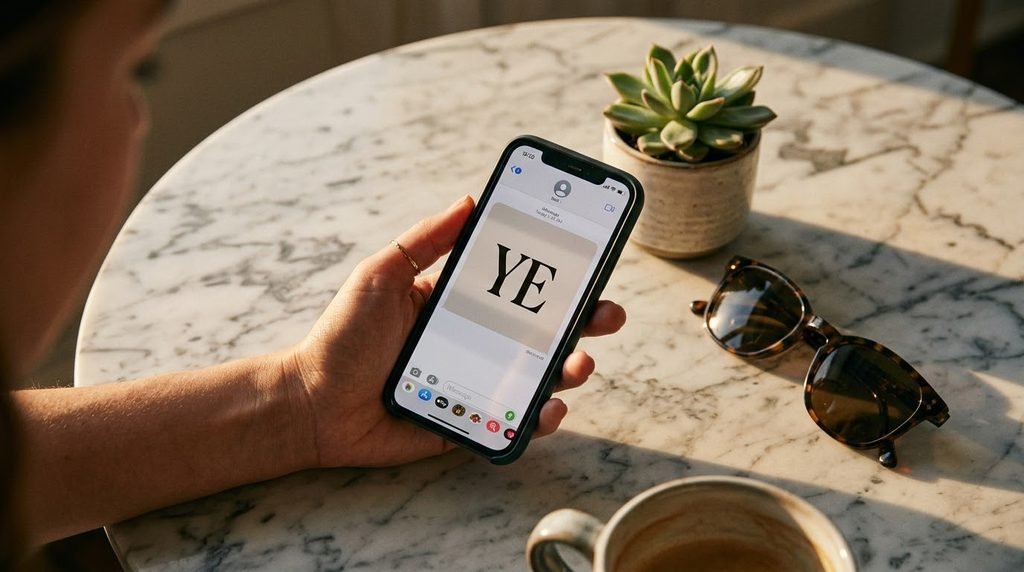
The most common meaning of “ye” in casual texting is “yes.” People sometimes use it as a short, relaxed way to agree with someone or answer a question.
For example:
- Person A: “Are you joining us tonight?”
- Person B: “Ye!”
Here, “ye” means yes. The sender is confirming that they plan to join.
Some people also use it as a variation of “yeah,” especially when chatting quickly or using their own informal spelling style. It is not a standardized abbreviation, so its meaning may vary from one person to another.
Consider these examples:
- “Ye, I saw your message.”
- “Ye bro, that sounds good.”
- “Ye, I’ll be there in five minutes.”
- “Ye haha, I know what you mean.”
In each example, the word expresses agreement or acknowledgment.
However, “ye” is not always the same as “yes.” In historical English, it can mean “you,” and in modern online conversations, it can sometimes appear as a name or a reference to a particular person.
The easiest way to understand it: If someone uses “ye” to answer a question, they probably mean yes. If it appears in a longer phrase, look at the surrounding words before deciding what it means.
What Does Ye Stand For?
Unlike many internet abbreviations, such as LOL or BRB, “ye” does not have one universally accepted expanded form.
When used as casual text slang, it generally functions as an informal spelling of “yes” or “yeah.” It is not necessarily an acronym in which each letter represents a separate word.
Here are the main possibilities:
- Yes: An informal answer that confirms something.
- Yeah: A casual expression of agreement or acknowledgment.
- You: An older English usage found in historical writing and traditional expressions.
- Ye as a name: A reference to the artist Ye, formerly known as Kanye West.
- A personal spelling choice: Some people use “ye” simply because they prefer how it looks or sounds.
For example, if your friend texts “Ye, let’s go,” the intended meaning is probably “Yes, let’s go.”
On the other hand, if someone writes “Ye shall know the truth,” the word belongs to an older or stylized form of English rather than modern texting slang.
It is helpful not to assume that every appearance of “ye” has the same meaning. Context is more reliable than the spelling alone.
Why Do People Use Ye Instead of Yes?

People often shorten words in digital conversations because they want to communicate quickly and casually. Texting does not always follow the spelling and grammar rules used in school essays, professional emails, or formal documents.
Using “ye” instead of “yes” may be a personal habit, a playful choice, or a way to match the tone of a conversation.
Here are some common reasons people might use it.
1. To Reply Quickly
A one-word answer takes less effort than a complete sentence. Some people use “ye” as a quick response when they are busy or chatting casually.
Example:
“Are you home?”
“Ye.”
The answer is short but still communicates the message.
2. To Sound Casual
In conversations with friends, people often prefer relaxed language over formal wording.
Compare these responses:
- “Yes, I will attend.”
- “Yeah, I’ll come.”
- “Ye, I’ll be there.”
All three can express agreement, but the last two sound more casual.
3. To Match Their Friends’ Style
Friends often develop their own ways of communicating. They may use unusual spellings, nicknames, emojis, or inside jokes that make sense within their group.
If several people in a group chat regularly use “ye,” the spelling may become part of their shared texting style.
4. To Be Playful
Sometimes, people use unconventional spellings simply because they find them funny or expressive.
For instance:
“Yeaaa, weekend finally!”
This message communicates excitement rather than a plain, neutral answer. The extra letters also change the tone.
5. Because of Typing Habits
Not every unusual spelling has a special meaning. A person may type “ye” out of habit, use speech-to-text, or make a quick typing error.
If the intended meaning is unclear, it is better to consider the whole message rather than overanalyze a single word.
Ye Meaning in Different Conversations
The meaning of “ye” becomes easier to understand when you look at how it appears in a sentence.
Here are several examples of everyday conversations.
When Answering a Question
Example:
“Did you finish the assignment?”
“Ye, just done.”
In this case, “ye” means yes. The sender confirms that the assignment is finished.
When Making Plans
Example:
“Wanna grab something to eat later?”
“Ye, sounds good.”
The person is agreeing to the plan. The tone is friendly and informal.
When Talking to a Friend
Example:
“Bro, that movie was amazing.”
“Ye, the ending was wild.”
Here, “ye” works like “yeah.” It shows agreement and keeps the conversation moving.
When Confirming Information
Example:
“You got the address I sent?”
“Ye, got it.”
The sender confirms that they received the address.
When Showing Excitement
Example:
“Tomorrow is a holiday!”
“Yeesss!”
Although this example uses a longer spelling, it illustrates how people stretch words to express excitement. A simple “ye” may serve a similar purpose in some conversations.
When Responding Without Much Detail
Example:
“Are you still coming?”
“Ye.”
The sender gives a short answer. It most likely means yes, although it does not explain anything beyond the basic confirmation.
These examples show that “ye” is often a conversational shortcut. The surrounding message helps establish whether the sender is agreeing, confirming information, or simply acknowledging what someone said.
What Does Ye Mean From a Guy?
If a guy texts you “ye,” he is most likely saying “yes” or “yeah.” The word itself does not automatically indicate romantic interest, annoyance, or any particular emotion.
Its tone depends on the conversation, the relationship, and his usual texting habits.
For example:
Example 1: A normal response
You: “Are you coming to the party?”
Him: “Ye.”
Meaning: He is probably confirming that he will come.
Example 2: An enthusiastic response
You: “Wanna hang out this weekend?”
Him: “Ye definitely!”
Meaning: He seems positive about the plan.
Example 3: A short response
You: “Did you see what I sent?”
Him: “Ye.”
Meaning: He has likely seen your message, but he has not added much detail.
Example 4: A playful response
You: “You finally finished your work?”
Him: “Ye lol.”
Meaning: He is answering casually, possibly with a joking tone.
A short answer does not necessarily mean that he is uninterested. Some people naturally send brief messages, particularly when they are busy or not accustomed to long conversations.
If you want to understand his feelings, pay attention to the broader pattern. Does he ask you questions, continue conversations, make plans, and communicate consistently? Those behaviors offer more useful clues than the word “ye” alone.
What Does Ye Mean From a Girl?
When a girl texts “ye,” it usually means the same thing it would mean from anyone else: yes, yeah, or an informal acknowledgment.
The word does not have a special female-specific meaning.
For example:
- You: “Did you get home safely?”
- Her: “Ye, I’m home.”
She is confirming that she arrived.
Another example:
- You: “Should we watch that new show?”
- Her: “Ye haha.”
She is agreeing in a casual tone.
If she replies with only “ye,” you might wonder whether she is being friendly, bored, or distant. However, the word alone is not enough to establish her mood.
Some people prefer short replies, while others use more expressive language. Compare her message with her usual style before drawing conclusions.
If you are unsure what she means, a simple follow-up question can clarify the conversation without making the situation awkward.
What Does Ye Mean on Snapchat?
On Snapchat, “ye” generally carries the same informal meaning as it does in regular text messages.
People use the platform to send quick replies, maintain streaks, react to snaps, and coordinate plans. Short answers fit naturally into these conversations.
For example:
- “You sending a snap today?” — “Ye.”
- “That was your dog in the picture?” — “Ye lol.”
- “Are you going out tonight?” — “Ye, wbu?”
- “You saw my story?” — “Ye.”
In these examples, the word indicates agreement or confirmation.
It is important to remember that “ye” is not an official Snapchat feature or a special Snapchat-only abbreviation. Its meaning comes from ordinary language and the context in which it appears.
If someone sends “ye” after you ask a direct question, you can usually interpret it as yes. If the message appears alongside other slang, emojis, or an inside joke, those details may add meaning.
For example, “ye 😂” could be a playful agreement, while “ye” by itself may be neutral.
Neither version proves that the sender is flirting or expressing a hidden message.
What Does Ye Mean on Instagram, TikTok, and Other Social Media?
The meaning of “ye” on Instagram, TikTok, Facebook, and other social platforms is generally similar to its meaning in texting.
People may use it in comments, direct messages, captions, and group conversations.
In Instagram DMs, “ye” may be a quick response to a question or invitation.
Example:
“Are you coming to the meetup?”
“Ye, see you there.”
It can also appear in comments when someone casually agrees with another person’s opinion.
TikTok
On TikTok, the word may appear in comments or messages. Users sometimes adopt unusual spellings and expressions as part of their personal online style.
Example:
Comment: “This song is still a classic.”
Reply: “Ye fr.”
Here, “ye” means yeah, while “fr” commonly means “for real.” Together, the reply expresses agreement.
In Facebook Messenger, “ye” may be used in casual conversations with friends and family.
Example:
“Did you see the photos?”
“Ye, they look great.”
WhatsApp users often rely on short replies to keep conversations moving.
Example:
“Can you call me when you’re free?”
“Ye, sure.”
In all these situations, “ye” is informal. It is generally better suited to relaxed digital conversations than to formal communication.
Is Ye the Same as Yeah, Yes, and Yep?
These words are similar, but they can differ slightly in tone and usage.
| Word | Common meaning | Typical tone |
|---|---|---|
| Ye | Usually yes or yeah in casual texting | Informal; context-dependent |
| Yeah | Yes or agreement | Casual and conversational |
| Yes | An affirmative answer | Neutral or formal |
| Yep | Yes | Friendly and informal |
| Yup | Yes | Casual; sometimes very brief |
| Yea | Yes or an affirmative vote in certain contexts | Context-dependent |
| Yay | An expression of happiness or excitement | Positive and enthusiastic |
Although “ye” and “yeah” can communicate the same idea, “ye” is less standardized in modern texting. Not everyone uses it, and some readers may interpret it differently.
“Yea” also deserves attention because it is an established English word, particularly in voting or formal expressions of agreement. Meanwhile, “yay” generally expresses happiness, as in “Yay, we won!”
These spellings are not interchangeable in every sentence.
For example:
- “Yeah, I’ll come.” — Agreement.
- “Yes, I’ll attend.” — Agreement in a more neutral or formal style.
- “Yep, got it.” — Casual confirmation.
- “Yay, we won!” — Excitement.
- “Ye, I’ll come.” — Likely casual agreement, depending on the sender.
When you are writing a message and want to avoid confusion, “yes” or “yeah” is usually clearer than “ye.”
Does Ye Ever Mean You?
Yes. In older English, “ye” was used as a form of the second-person pronoun, meaning “you.” It appears in historical writing, religious language, poetry, and deliberately old-fashioned expressions.
You may recognize it from phrases such as “Hear ye!” or “Ye olde shop.”
In historical usage, “ye” is not simply another spelling of modern texting slang. Its grammatical role and pronunciation depend on the period and context.
The phrase “ye olde shop,” for instance, is a traditional, stylized way of presenting an old-fashioned shop. It is not normally intended as a casual message meaning “yes, old shop.”
This distinction matters because someone reading a historical text, a fantasy novel, or a deliberately old-fashioned sign may encounter “ye” in a completely different sense.
In ordinary modern conversation, however, a standalone “ye” used as a reply is more likely to be intended as an informal yes or yeah than as the historical pronoun.
Is Ye a Name?
Yes. “Ye” is also known as the professional name used by the American rapper and music producer formerly known as Kanye West.
When the word appears in a discussion about music, celebrity news, albums, performances, or entertainment, it may refer to the artist rather than an affirmative answer.
For example:
- “Have you listened to Ye’s album?”
- “Ye released a new project.”
- “People are discussing Ye online.”
In these sentences, “Ye” functions as a proper name. Capitalization and surrounding words help identify the meaning.
This is another reason context is important. A sentence such as “Ye, that song is good” probably contains an informal affirmative, while “Ye’s song is good” likely refers to the artist.
The same spelling can serve different purposes depending on how it is used.
What Does Ye Mean in Gaming Chats?
Gaming conversations often move quickly, so players use brief words and abbreviations to coordinate their actions.
In a gaming chat, “ye” may be used as a quick affirmative response.
For example:
- Player A: “Ready for the next match?”
- Player B: “Ye.”
- Player A: “Let’s queue.”
Here, “ye” means yes.
Another example:
- Player A: “Need help with this mission?”
- Player B: “Ye, come here.”
The word confirms that help is needed.
However, gaming communities also develop their own slang, so the meaning can differ within a particular group. If the word appears in an unfamiliar phrase, consider the game, the discussion, and the other words in the message.
It is also possible that “ye” is simply a typo or a player’s preferred spelling. Not every short expression has a hidden gaming meaning.
Can Ye Sound Rude or Dismissive?
It can sometimes come across as brief or uninterested, but “ye” is not inherently rude.
The way a message feels depends on several factors, including the topic, the relationship between the people, and the sender’s usual communication style.
Consider these examples:
Neutral:
“Did you receive the file?”
“Ye, thanks.”
The sender confirms receipt and adds a polite acknowledgment.
Casual:
“Coming over later?”
“Ye.”
The sender gives a straightforward answer.
Potentially dismissive:
“I spent hours explaining everything. Did you understand?”
“Ye.”
In this situation, the very short reply might feel dismissive because the conversation calls for a more thoughtful response. However, it is still not possible to know the sender’s intention from that word alone.
They may be busy, distracted, or simply communicating in their usual style.
If a message feels cold, consider the broader exchange rather than focusing on one spelling choice. Tone is especially difficult to judge in text because there is no voice, facial expression, or body language to help interpret the words.
When necessary, ask a calm follow-up question instead of assuming the worst.
How Should You Reply When Someone Texts Ye?
Your response depends on the original question and whether the conversation needs to continue.
If the sender is simply confirming something, you may not need to reply at all. If you are making plans or discussing an important detail, a short follow-up can help.
Here are some natural responses.
When Someone Agrees With You
Them: “Ye.”
You could reply:
- “Cool!”
- “Awesome.”
- “Sounds good.”
- “Perfect.”
These work well when the conversation is casual and the agreement is clear.
When Someone Confirms Plans
Them: “Ye, I’ll be there.”
You could reply:
- “Great, see you then!”
- “Okay, thanks for confirming.”
- “Nice, see you soon.”
Choose a response that matches how formal or relaxed the situation is.
When You Need More Information
Them: “Ye.”
You could reply:
- “What time works for you?”
- “Okay, which place?”
- “Great, should I bring anything?”
These questions move the conversation forward rather than repeating information you already know.
When You Are Unsure What They Mean
If the message is ambiguous, you can ask:
- “Do you mean yes?”
- “Just checking, are you saying you’re coming?”
- “I’m not sure I understood. Can you clarify?”
There is no need to make a simple conversation complicated. A brief clarification is often the easiest solution.
Common Misunderstandings About Ye
Because “ye” has several possible uses, people sometimes assign meanings that the sender never intended.
Here are a few common mistakes to avoid.
Assuming It Always Means Yes
Although “yes” is a common interpretation in casual texting, the word can also be a historical pronoun, a name, or a personal spelling choice.
Look at the sentence before deciding.
Thinking It Is Always an Acronym
“Ye” is not generally a standard acronym in everyday texting. When used to mean yes, it functions more like an informal spelling or conversational variant.
Assuming a Short Reply Means Someone Is Angry
A one-word answer can feel abrupt, but it does not automatically indicate irritation or disinterest.
Some people simply prefer concise messages.
Treating It as a Secret Romantic Signal
There is no widely established romantic meaning attached to “ye.” A person might use it while flirting, but the word itself does not establish romantic interest.
Confusing Ye With Yay
“Ye” may mean yes in casual texting, while “yay” expresses happiness or excitement.
For example, “Ye, I’ll go” confirms a plan. “Yay, we’re going!” expresses enthusiasm.
Assuming It Has a Special Meaning on Every Platform
The word does not have a universal, platform-specific definition on Snapchat, TikTok, Instagram, or WhatsApp.
Most of the time, the meaning comes from ordinary language and the surrounding conversation.
Is Ye Appropriate in Professional Messages?
Generally, it is better to avoid “ye” in professional communication unless you are sure the recipient understands your style.
In a message to a colleague, teacher, client, or manager, a clear answer is usually more effective.
Instead of writing:
“Ye, I’ll send it.”
You could write:
“Yes, I’ll send it shortly.”
Instead of:
“Ye, got it.”
You could write:
“Yes, I received it. Thank you.”
The clearer versions sound more polished and leave less room for misunderstanding.
In a relaxed workplace chat where everyone uses informal language, “ye” may not cause a problem. Still, standard spelling is the safer option when the message concerns deadlines, instructions, appointments, or important decisions.
The goal is not to avoid every form of slang. It is to choose language that suits the audience and the situation.
Examples of Ye in Everyday Text Conversations
The following examples show how the word can appear naturally in different situations.
Example 1: Making plans
A: “Are we still meeting at six?”
B: “Ye, see you there.”
Meaning: The meeting is still happening.
Example 2: Asking about homework
A: “Did you finish the homework?”
B: “Ye, just finished.”
Meaning: The sender confirms that the work is complete.
Example 3: Talking about food
A: “Want some pizza?”
B: “Ye, please.”
Meaning: The sender agrees and would like pizza.
Example 4: Confirming a message
A: “Did you get the link?”
B: “Ye, thanks.”
Meaning: The sender received the link.
Example 5: Chatting with friends
A: “That match was so close.”
B: “Ye bro, wild ending.”
Meaning: The sender agrees with the observation.
Example 6: Responding to an invitation
A: “We’re going to the mall this weekend. Wanna come?”
B: “Ye, sounds fun.”
Meaning: The sender accepts the invitation.
Example 7: Checking availability
A: “Free to talk right now?”
B: “Ye, what’s up?”
Meaning: The sender is available to talk.
Example 8: Confirming a delivery
A: “Your package arrived?”
B: “Ye, got it this morning.”
Meaning: The package has arrived.
Example 9: Discussing a movie
A: “The sequel was better than the first one.”
B: “Ye, I liked it more too.”
Meaning: The sender agrees with the opinion.
Example 10: Replying to a reminder
A: “Don’t forget to bring your notebook tomorrow.”
B: “Ye, won’t forget.”
Meaning: The sender acknowledges the reminder.
In these examples, the informal spelling does not change the basic meaning of the conversation. It simply gives the message a casual tone.
FAQs:
Does ye mean yes in texting?
Yes, “ye” can mean “yes” in casual text messages. It is often used as an informal response to a question or as a way to show agreement. However, the exact meaning depends on the context.
Is ye slang?
It can function as informal texting slang when used to mean yes or yeah. It is not a standardized abbreviation, and not everyone uses it in the same way.
Is ye short for yeah?
Sometimes. In casual messages, people may use “ye” as a variation of “yeah.” However, it is not a universally recognized shortened form, so the sender’s intended meaning may depend on their personal texting style.
What does ye mean from a crush?
It usually means yes or yeah. The word alone does not prove that someone likes you romantically. Consider the full conversation and the person’s behavior rather than relying on one short reply.
What does ye mean on Snapchat?
It generally means yes, yeah, or an informal acknowledgment. It is not a special Snapchat feature or an official platform abbreviation.
What is the difference between ye and yea?
“Ye” can be an informal affirmative in modern texting or a historical pronoun meaning you. “Yea” is an established word used to express agreement, especially in voting or formal contexts. In casual messages, their intended meanings may overlap, but they are not identical in every situation.
Is ye the same as yay?
No. “Ye” may mean yes in casual texting, while “yay” is an expression of happiness, excitement, or celebration.
Can ye mean you?
Yes. In older English, “ye” was used as a form of “you.” This usage appears in historical writing and traditional expressions, such as “Hear ye.” In modern casual texting, however, a standalone “ye” is often intended as an informal affirmative.
Should I reply when someone says ye?
Reply if the conversation needs a response. You can say “Cool,” “Sounds good,” or “Perfect” when someone agrees with you. If the meaning is unclear, ask a simple follow-up question.
Is ye rude in a text?
Not necessarily. It can be a neutral, casual, or brief response. Whether it sounds rude depends on the conversation, the sender’s usual style, and the expectations of the person receiving it.
Final Thoughts:
In everyday texting, ye most commonly means yes or yeah. People may use it to answer questions confirm plans agree with friends, or keep a conversation moving without typing a longer response.
You might see it in messages on WhatsApp Snapchat Instagram, TikTok, and other social platforms. Its informal style makes it suitable for casual conversations although standard spellings such as yes and yeah are usually clearer in professional settings.
Remember that ye can also appear as a historical English word or as a proper name. The surrounding sentence is the best clue to its intended meaning.
If someone texts you ye you usually do not need to overthink it. Read the message in context consider the conversation, and respond naturally. Most of the time, it is simply a quick way of saying yes.

Zeya is an experienced English language writer, researcher, and content creator with over 5 years of experience in writing about words, phrases, slang, abbreviations, texting language, internet expressions, and everyday English communication.
As a dedicated author at LearnzText, Zeya focuses on making confusing words, short forms, slang terms, and modern expressions easy to understand. Her writing combines careful research with simple, natural explanations so readers can quickly discover what a word or phrase means, how it is used, and what it means in different conversations and social media contexts.
 Alina Mark
 Nira Mark